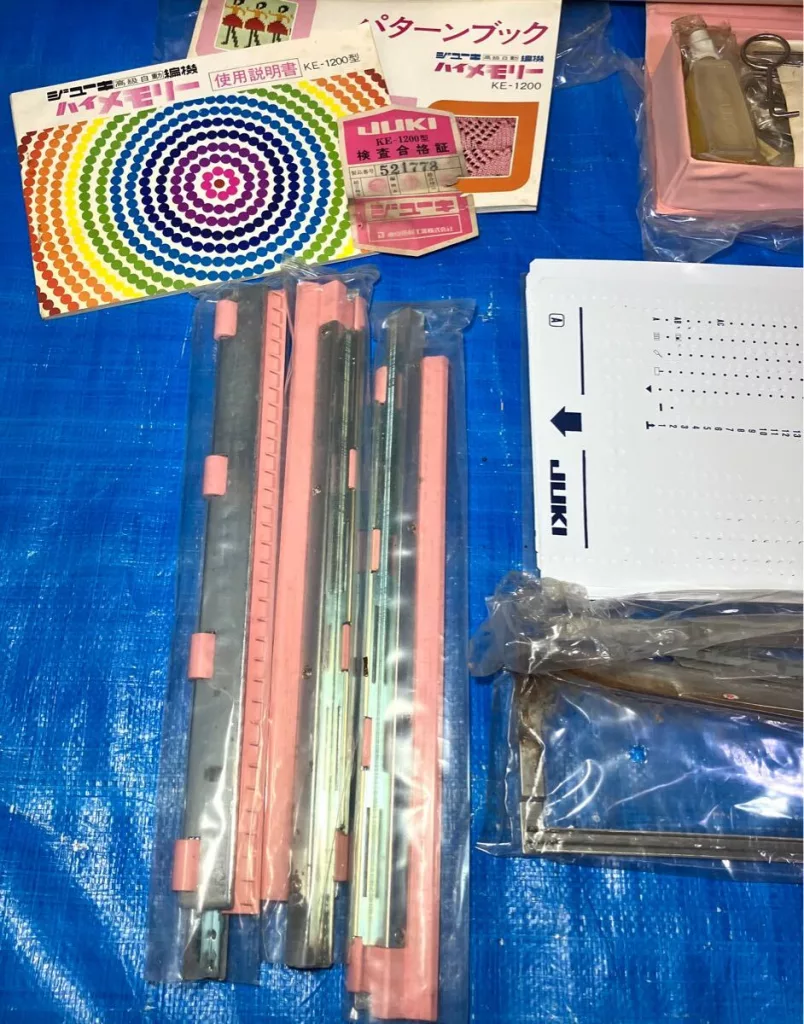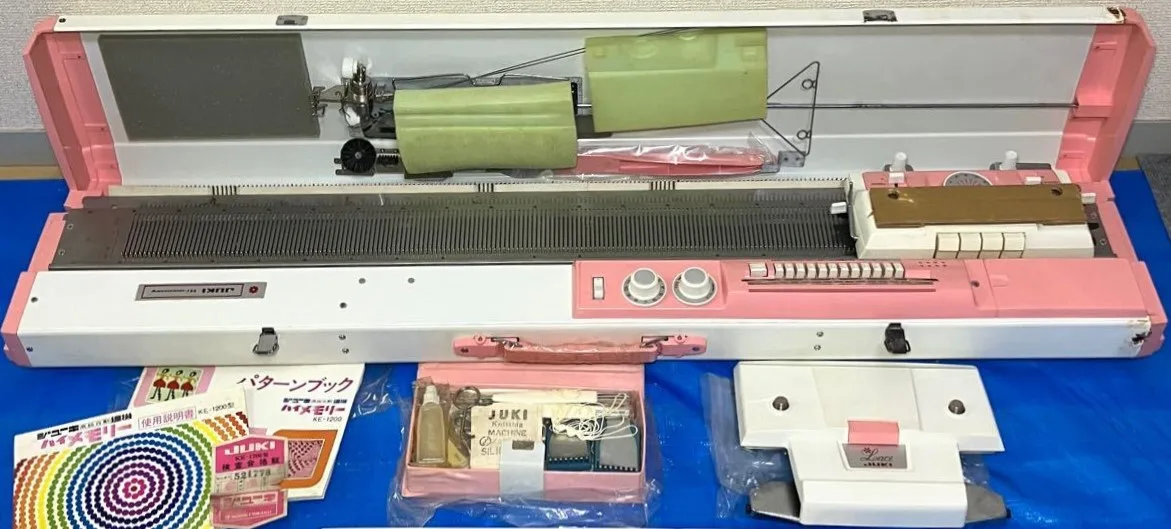
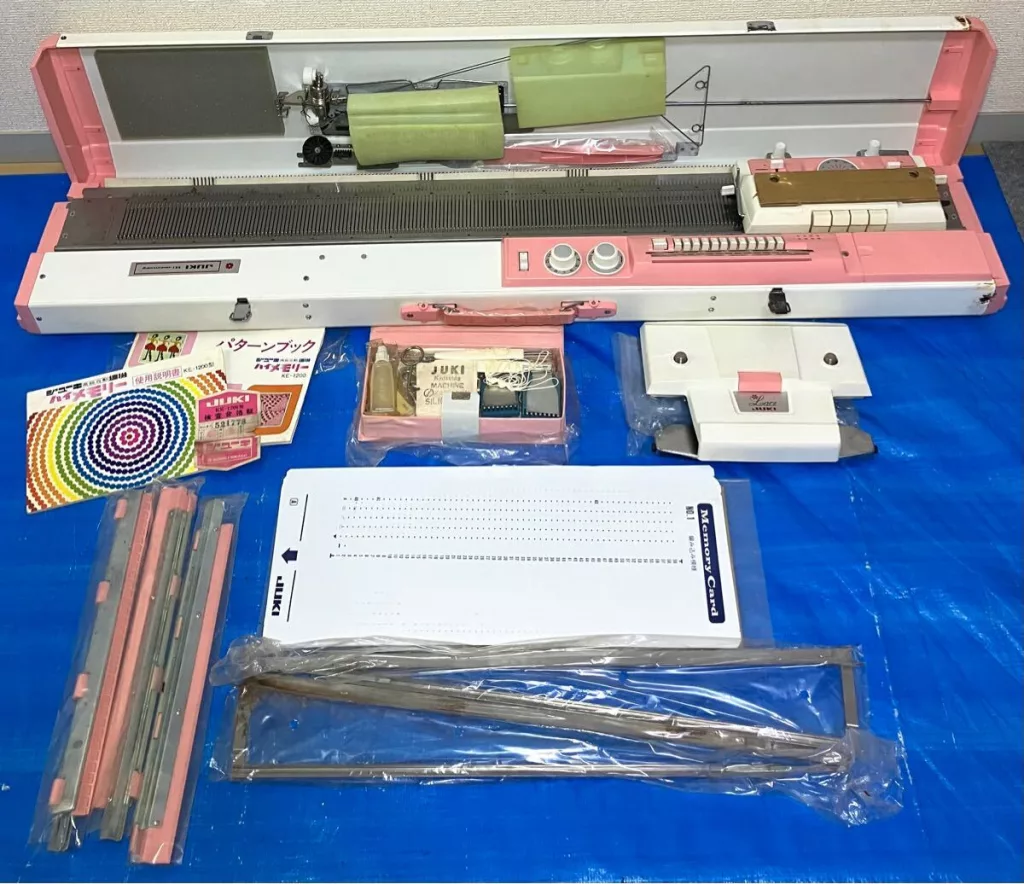
JUKI KE-1200 is a standard-gauge knitting machine with punch card capabilities. These cards are called ” memory cards ” in the manual (more below). The manual describes that the needle selection can be done by the pushbuttons as well as by memory cards.
It has 200 needles, 4.5 mm apart (thus, standard gauge). I have this machine in my collection and am excited to try it in the future.
The JUKI KE-1200 knitting machine uses punch cards (or, as they are called in the manual, “memory cards”) to initiate needle selection to create patterned knitted fabrics. The manual states that the cards are read only in the battery-operated mode. These cards need to be removed, though, if the needle selection is activated by the buttons.
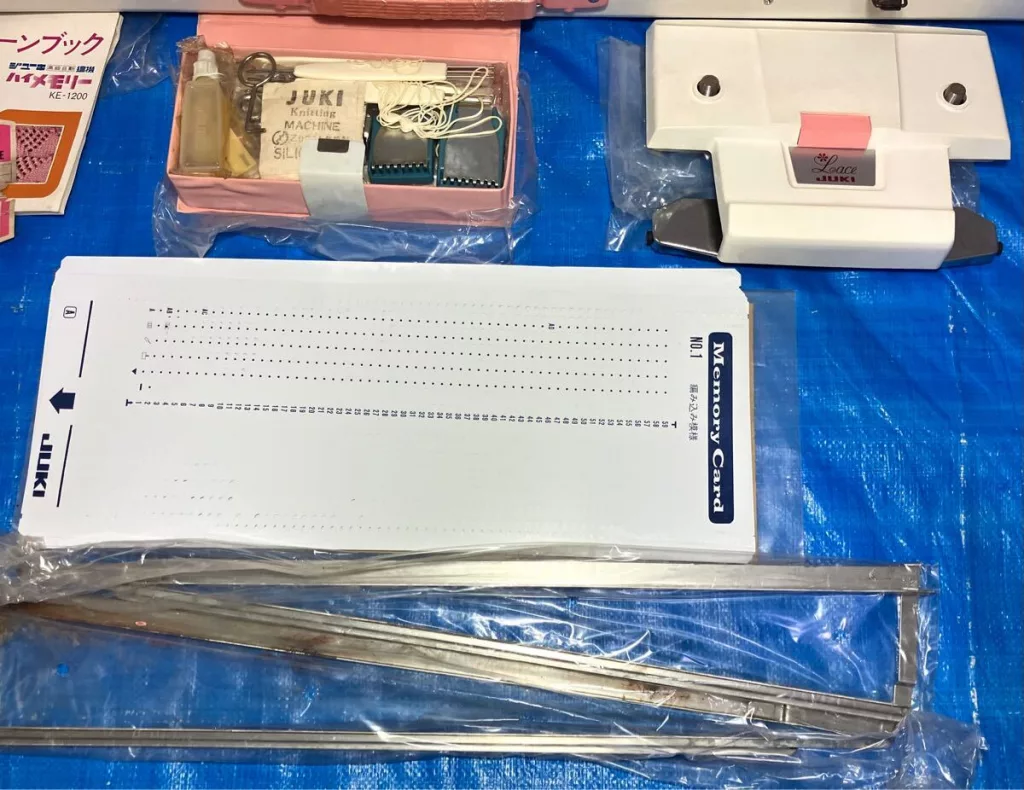
However, among the accessories is a ratchet lever, similar to Brother pushbutton machines. The ratchet is attached on the left and underneath the needle bed (while on the Brother on the right and behind the machine). Although I have not operated either of the machines, JUKI KE1200, with its punchcard and pushbutton capabilities, reminds me of some similar Toyota knitting machines and the Brother KH811 machine. The pushbutton principles are similar to those of Brother machines (but JUKI KE1200 has twelve buttons while Brother has a maximum of eight): the pattern center has a reverse switch and a slide dial.
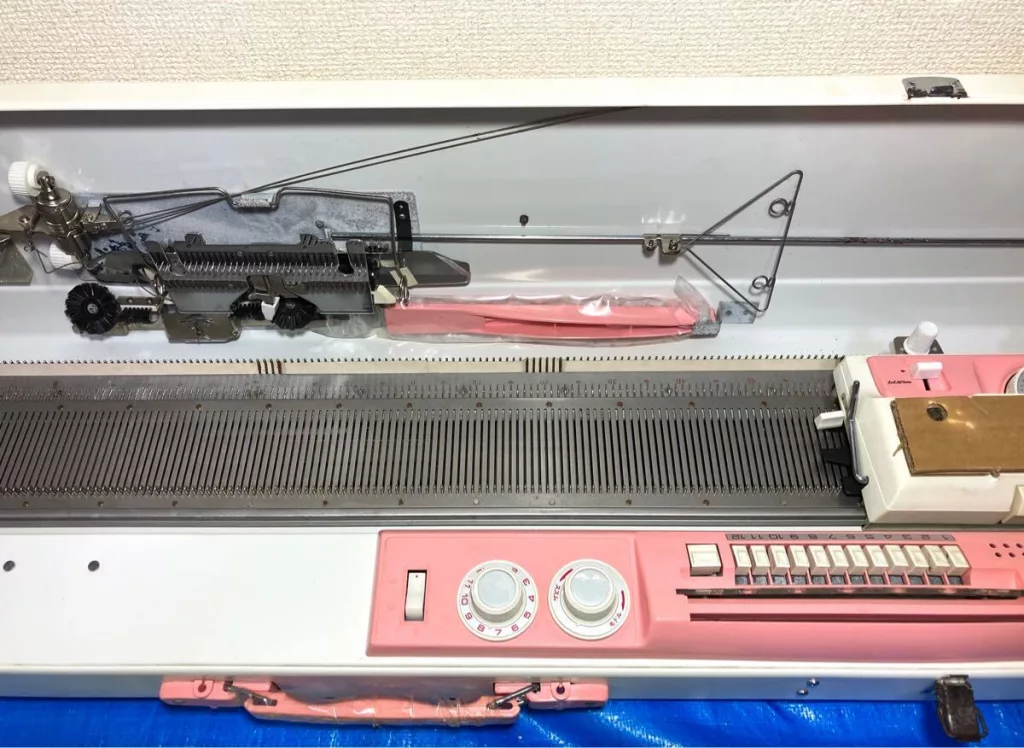
The battery-operated buzzer mechanism is similar to early punchcard models produced by Silver Reed Co (such as Empisal Knitmaster SK313, Silver SK313, Studio SK313, Silver SK315, Riccar RK702). JUKI KE-1200 can’t auto-pattern at all (even the buttons) without batteries because the pattern system uses electromagnets.
The main memory handle mechanism relies heavily on an internal battery to accurately trip the needle selectors. The ratchet lever acts as a manual fail-safe in case the battery mechanism isn’t working. It can also hook, push, or rearrange individual needle butts into “B” or “D” position during this pre-selection phase, bypassing the memory cards if needed.
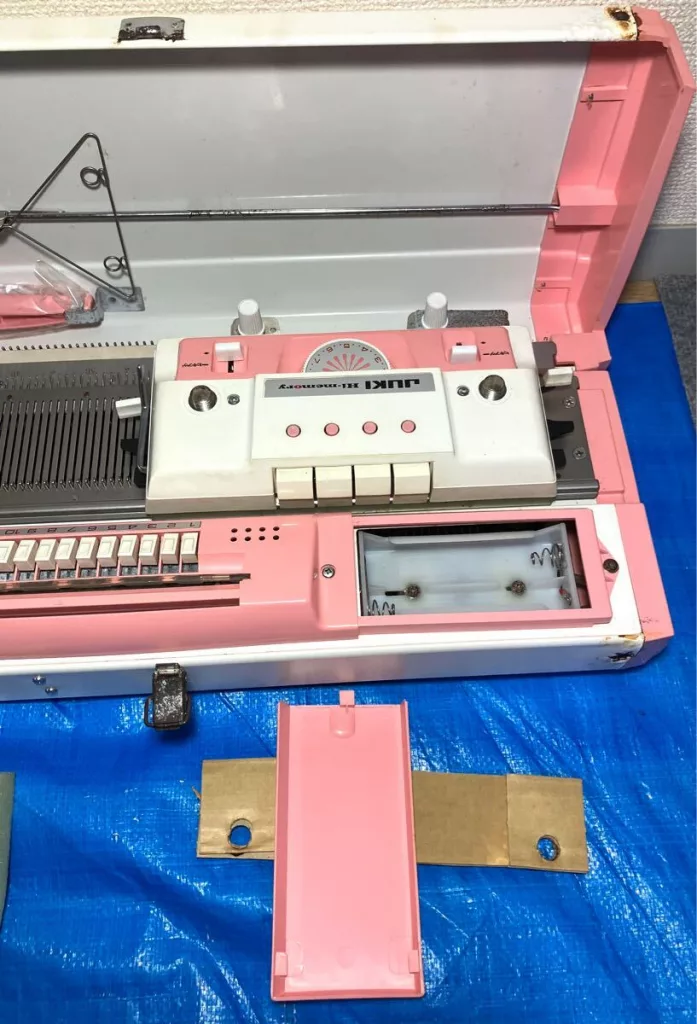
The cam buttons on the carriage have very cute round button-like release pins. They make the carriage of the JUKI KE1200 very unique. The buttons themselves on the carriage are responsible for tuck and color knitting. The carriage also has a row counter moving bar. I can’t wait to knit on my machine to experience all that!
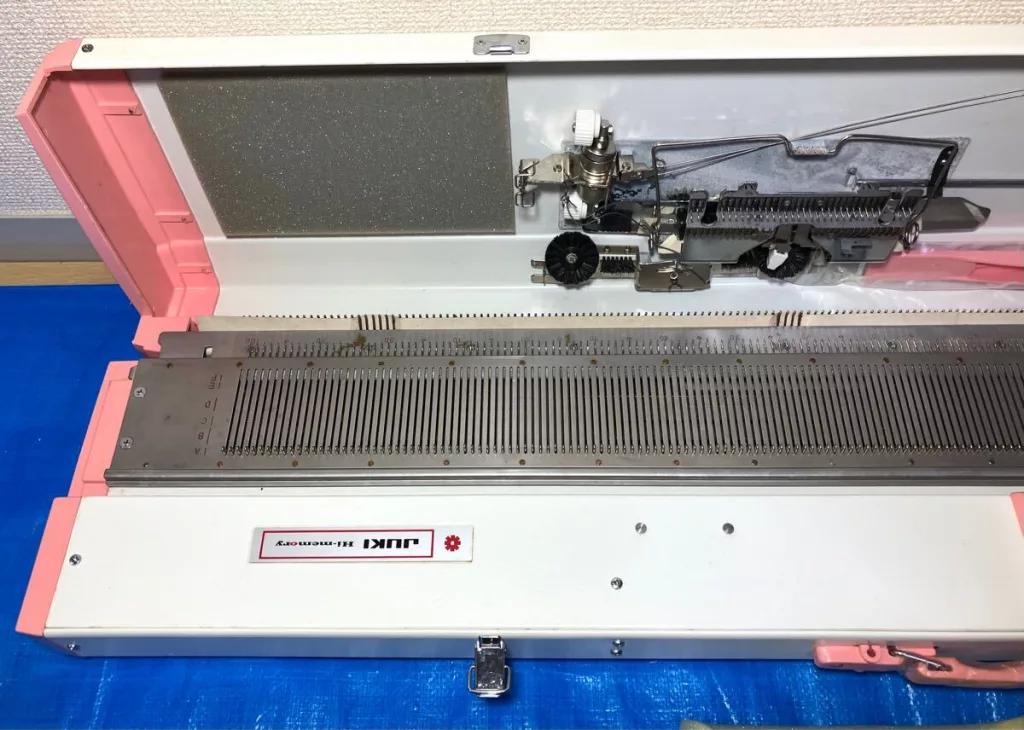
The needles have small “tails” on the needle “butts”. Needle positions on the bed range from A to F. The F position is very unusual: typically on Brother and Silver Reed machines, the maximum number of positions is five (up to E). It’s a solid machine, but if a needle breaks, you’ll have to buy Silver Reed needles and bend and cut them, as those are a proprietary design and hard to find.
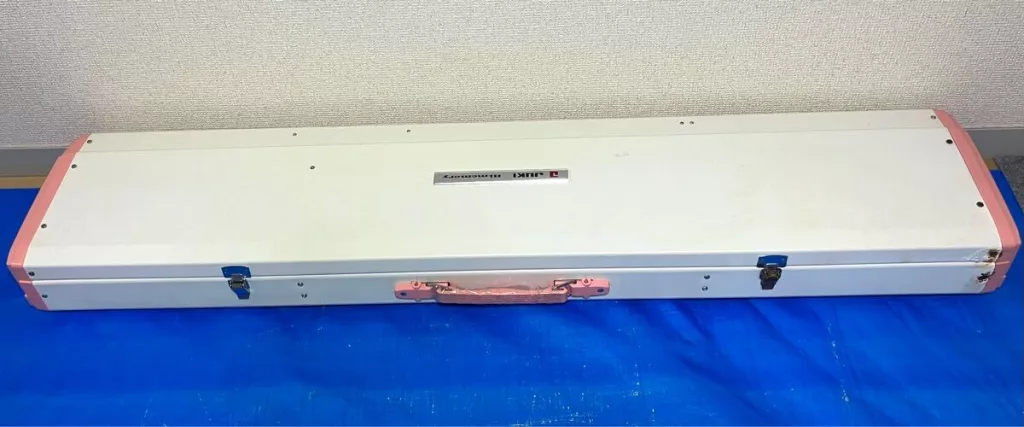
The manual describes an automatic cast-on. Table clamps are similar to punchcard-based Silver/Silver Reed/Singer/Empisal Knitmaster/Studio/Riccar machines. The handle has a very ergonomic design, very characteristic of JUKI knitting machines.
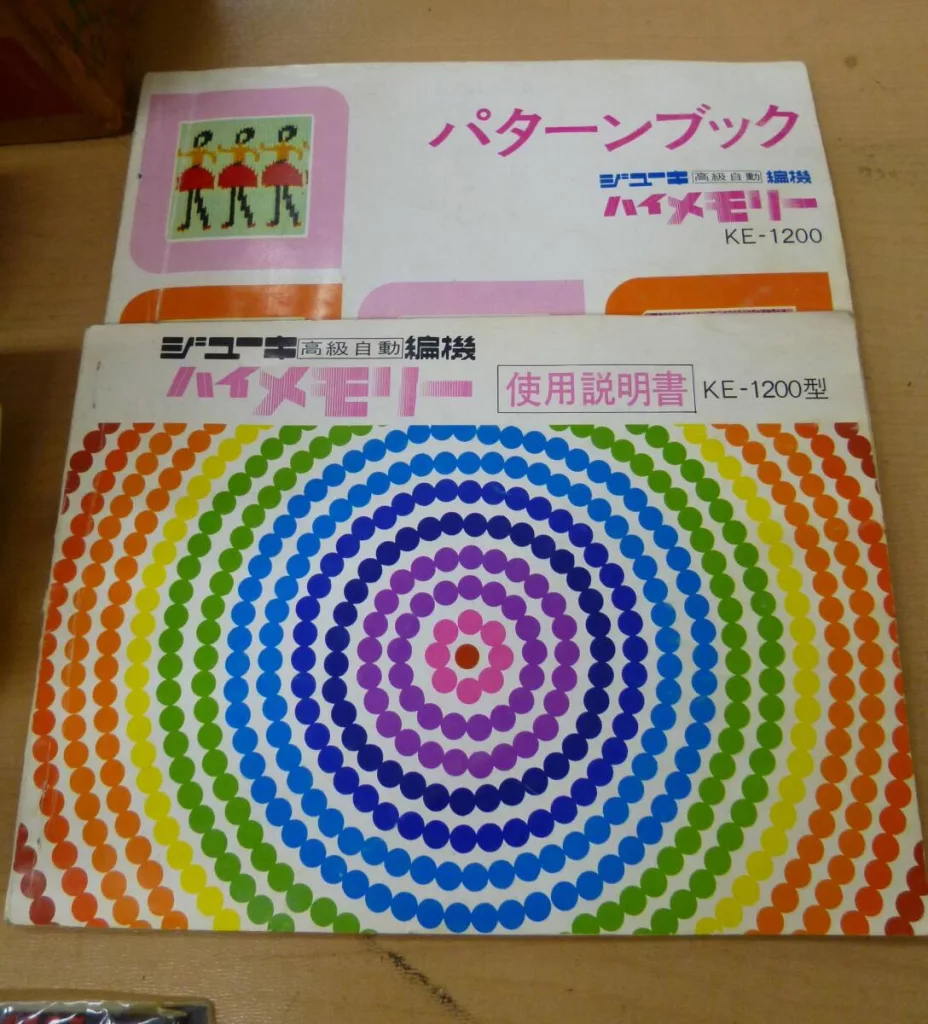
JUKI KE1200 is a true marvel of Japanese mechanical engineering. I know a lot of things are still confusing, and I am sure I’ll solve this confusion when I start using the machine. Stay tuned!