Category: JUKI
-
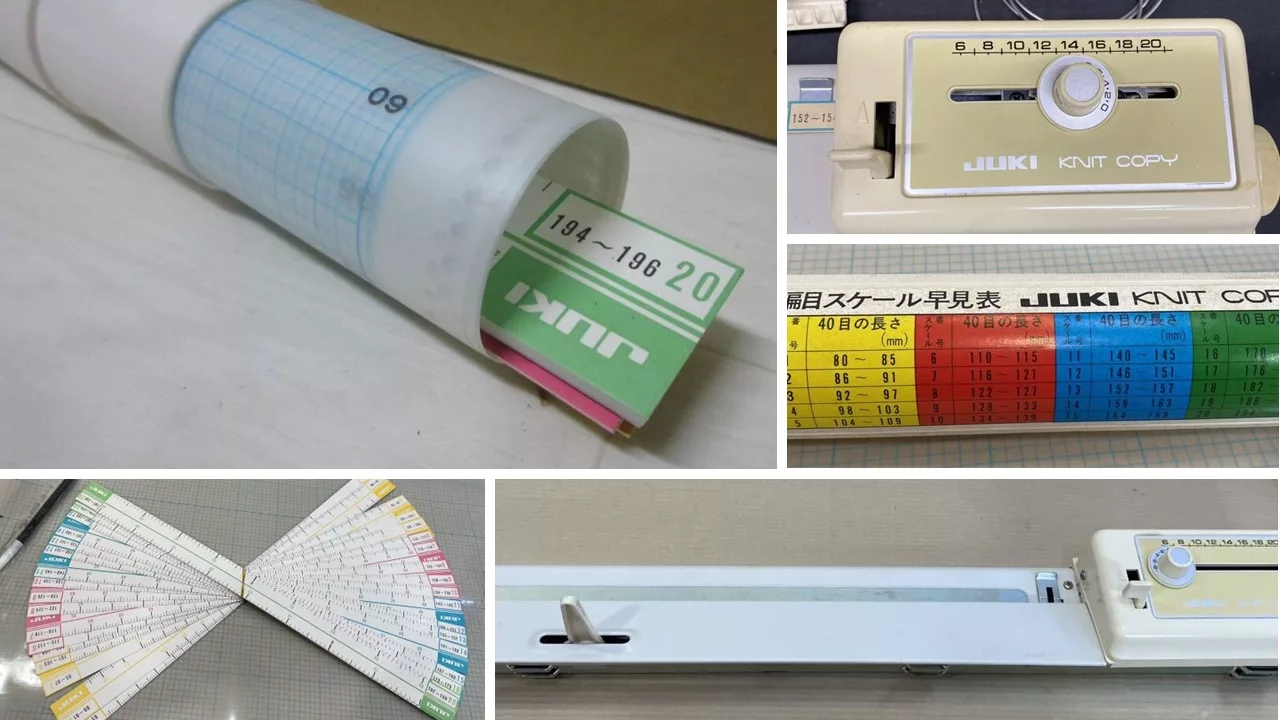
JUKI KC-7 knit copy
JUKI KC-7 knit copy is a charting accessory to assist machine knitters with even decreases and increases in their knitted fabric based on their swatch measurements. Stay tuned as I am searching for more information, including KC-7 compatibility with JUKI knitting machines. Other charting devices by JUKI are the knit copy JUKI KC3, KC5, KC8,…
-
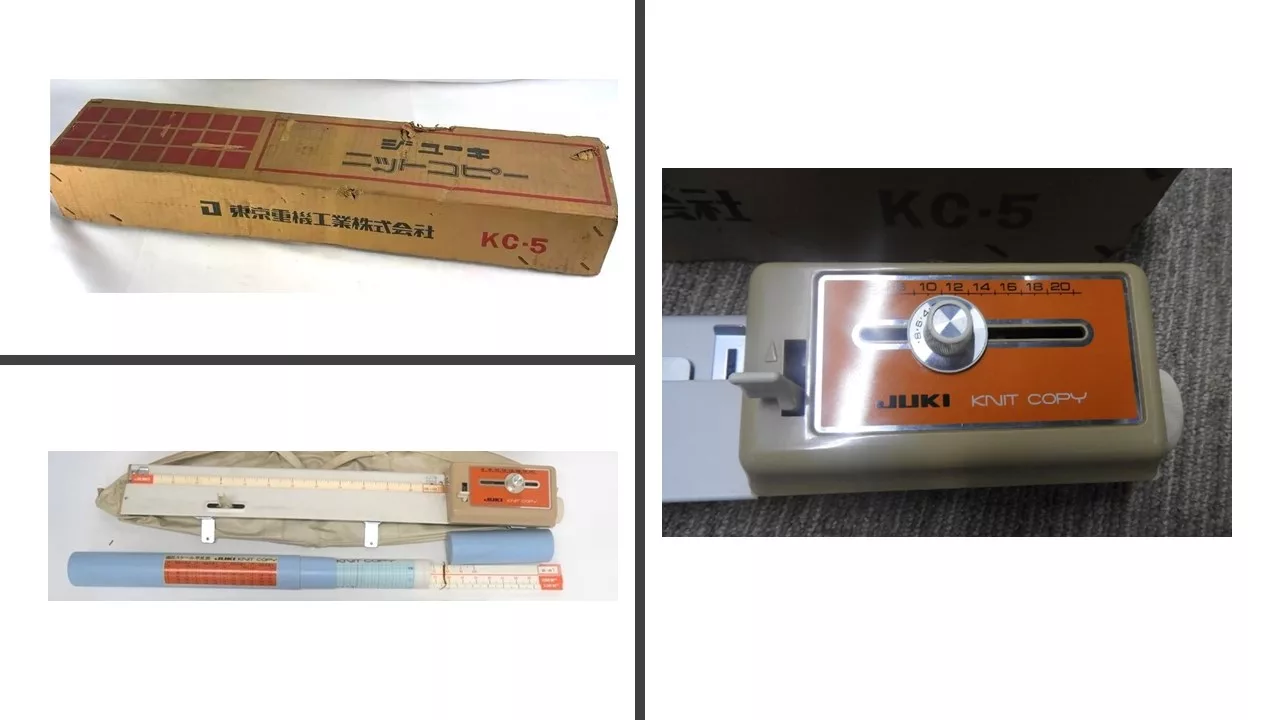
JUKI KC5 knit copy
JUKI KC5 knit copy is a charting accessory to assist machine knitters with even decreases and increases in their knitted fabric based on their swatch measurements. Stay tuned as I am searching for more information, including KC5 compatibility with JUKI knitting machines. Other charting devices by JUKI are the knit copy JUKI KC5, KC7, and…
-
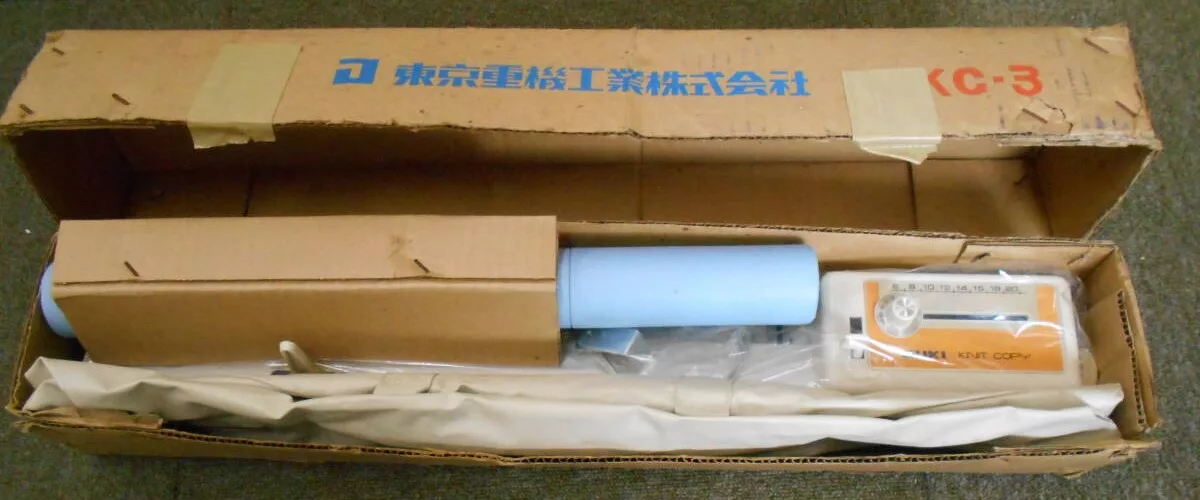
JUKI KC-3 knit copy
JUKI KC3 is a charting device assisting knitters with creating panels for sweaters, garments, etc. Stay tuned as I am finding more information (manuals, operation details, compatibility with JUKI knitting machines, etc.) while enjoying the pictures below. Other charting devices by JUKI are the knit copy JUKI KC5, KC7, KC8, and KE-1200.
-
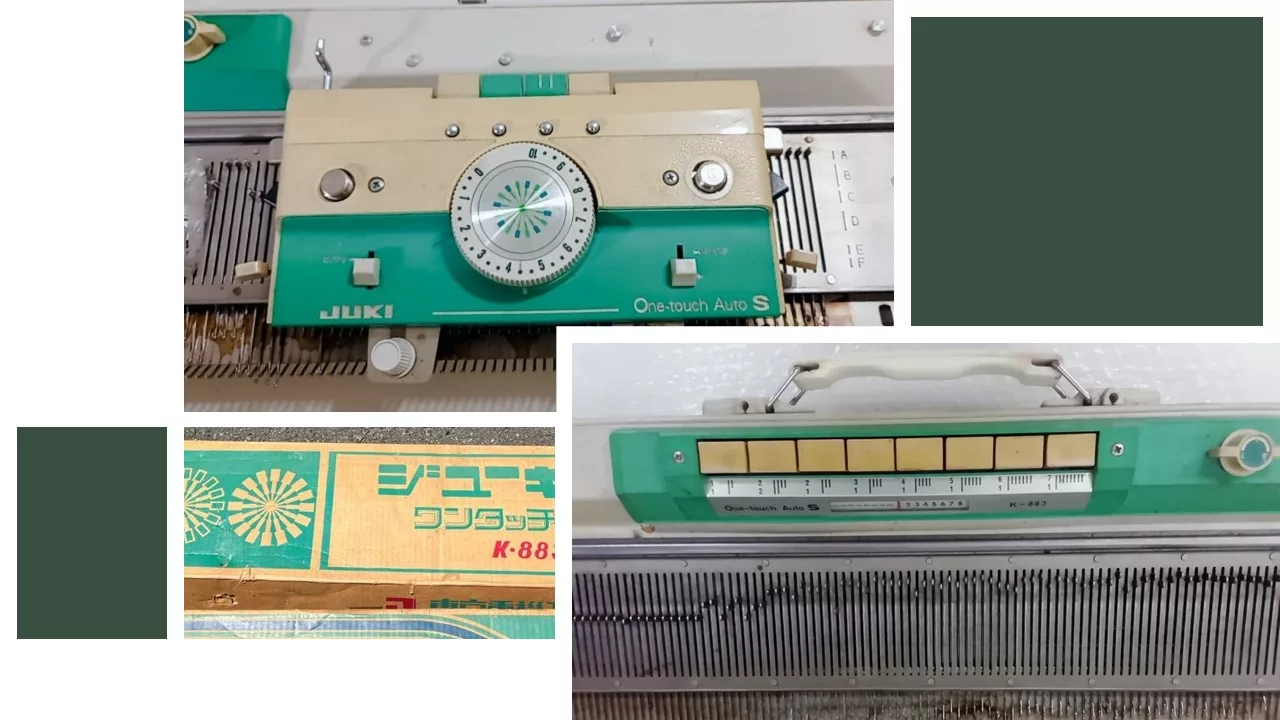
JUKI K-883, One Touch Auto S knitting machine.
JUKI K-883 is a standard-gauge machine, with 200 needles, 4.5 mm apart. With the exception of its pleasant green-ish color, this machine is very similar to its two other counterparts: JUKI K881 and JUKI K882. Thus, read the corresponding posts, while enjoying the pictures below. Check out the very last picture as it shows the…
-
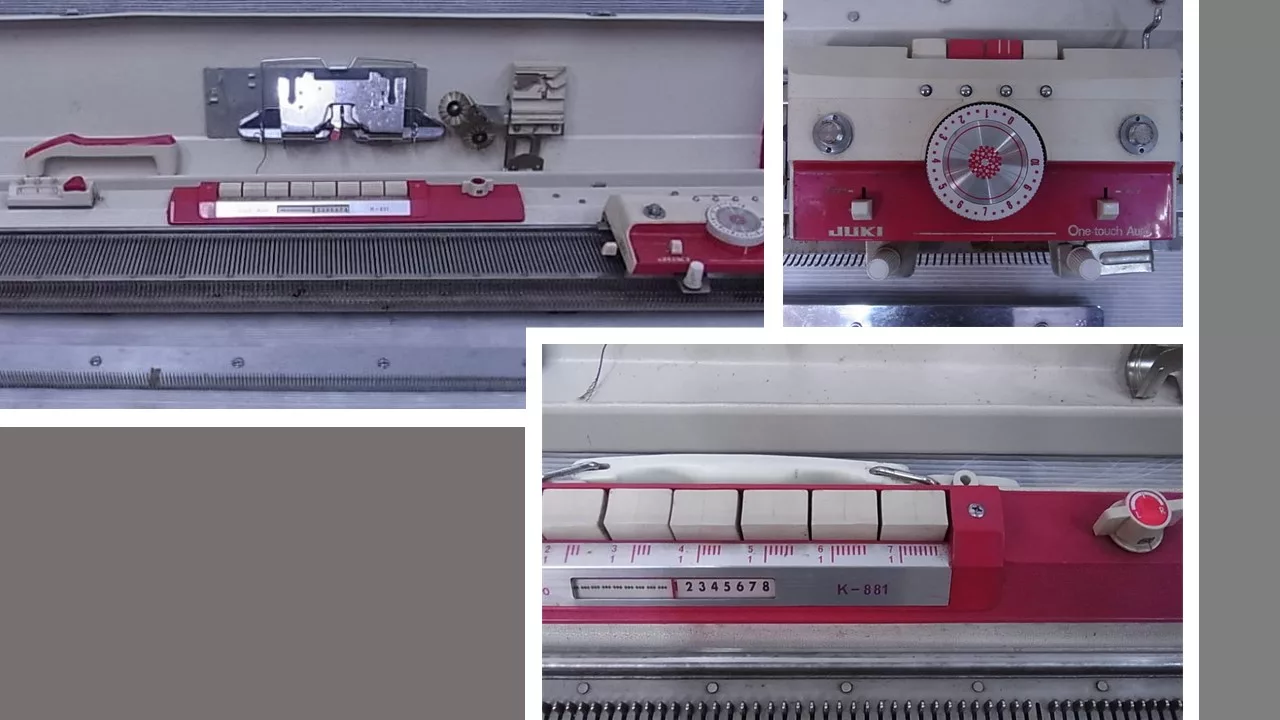
JUKI K881, One Touch Auto S, knitting machine
JUKI K-881 One Touch Auto S knitting machine is very similar to another standard-gauge JUKI knitting machine with the same eight pushbuttons: JUKI K-882, and JUKI K-883, both “One Touch Auto S”. Thus, read the corresponding post while enjoying the pictures below of this pretty red-colored machine (JUKI K882 is blue and JUKI K883 is…
-
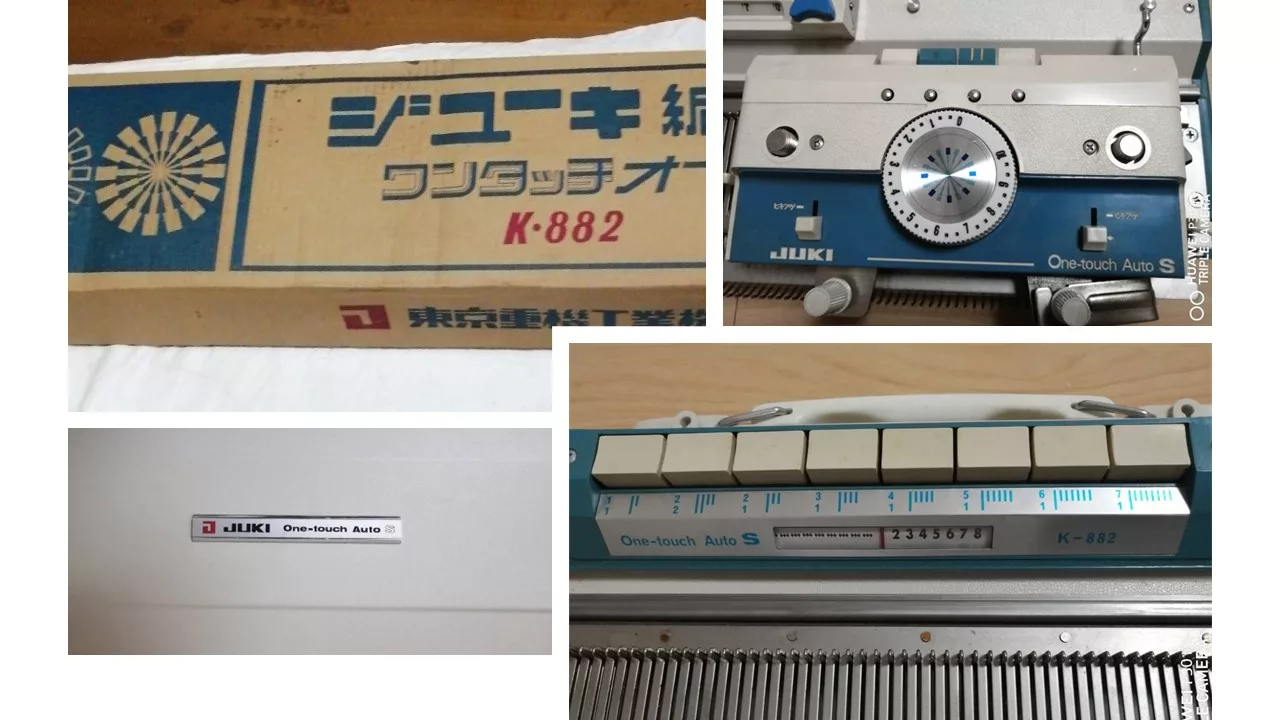
JUKI One touch Auto S K-882 knitting machine
JUKI K 882 has 200 needles, 4.5 mm apart, which makes it a standard-gauge knitting machine. The machine has eight pushbuttons which activate (i.e., push forward) the needles are when the ratchet tool is turned. The pushed-forward needles then help to form various stitches depending on the carriage settings. This (as well as JUKI K881…
-
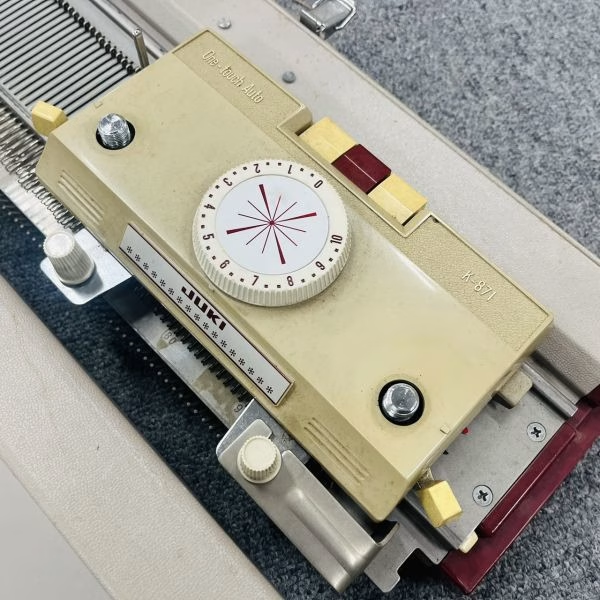
JUKI K 871, One Touch Auto, knitting machine
JUKI K 871 has 200 needles, 4.5 mm apart, which makes it a standard-gauge knitting machine. The machine has eight pushbuttons which activate (i.e., push forward) the needles are when the ratchet tool is turned. The pushed-forward needles then help to form various stitches depending on the carriage settings. There is no need to memorize…
-
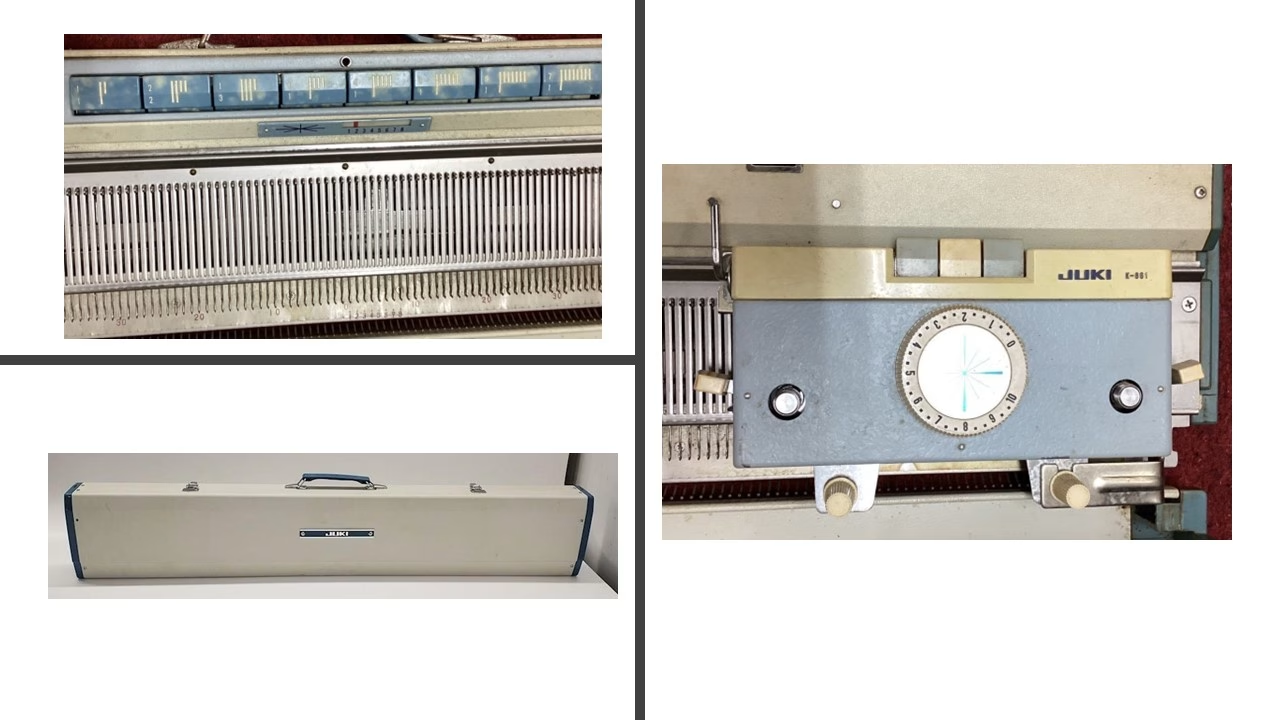
JUKI K 861 knitting machine
JUKI K-861 is a first JUKI knitting machine to offer semi-automatic needle selection, accomplished by eight push-buttons. It is a standard-gauge machine with 200 needles, 4.5 mm apart. Thus, it could be considered a JUKI pioneer for the whole JUKI series of knitting machines. The screw-on carriage handle, S-shaped table clamps and slide-in tool holder…
-
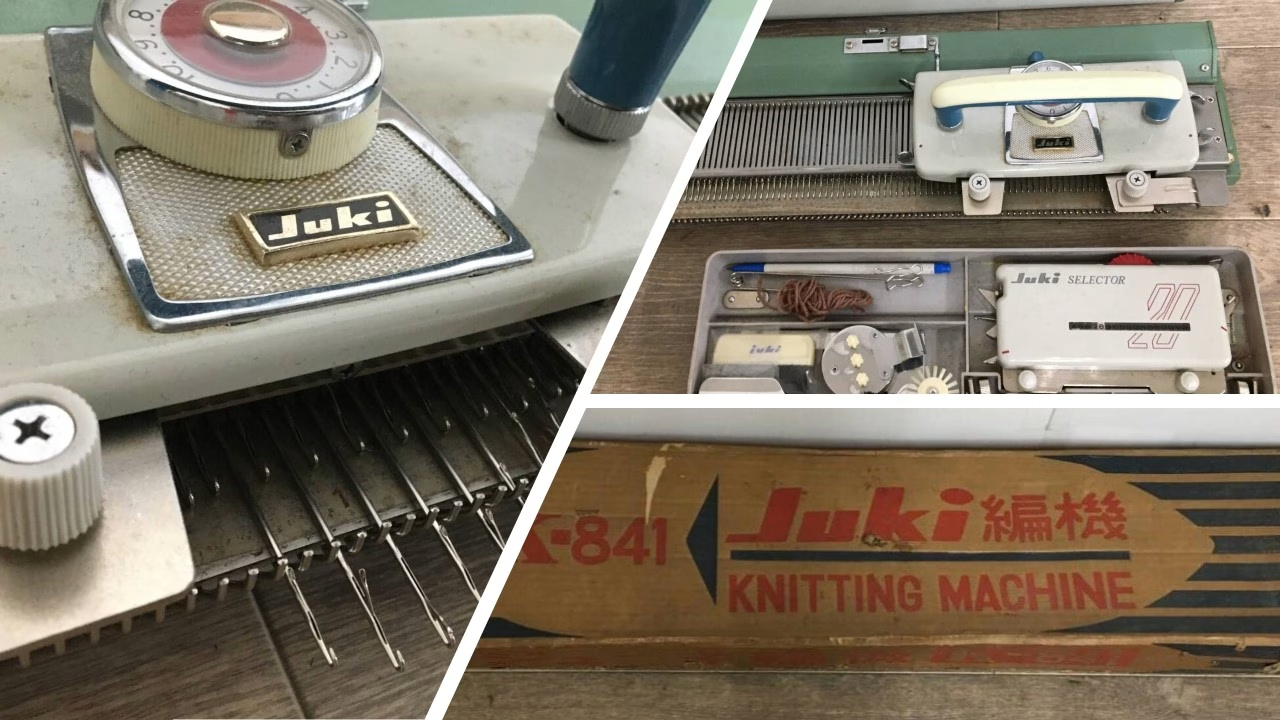
JUKI K-841 knitting machine
JUKI K-841 is a standard-gauge knitting machine with 200 needles, 4.5 mm apart. Not much is available about this machine. Judging by its vintage row counter, JUKI K-841 was manufactured in Japan very likely in the early 1960s. Additionally, a unique tension mast is also seen in the machines manufactured up to the late 1960s…
-
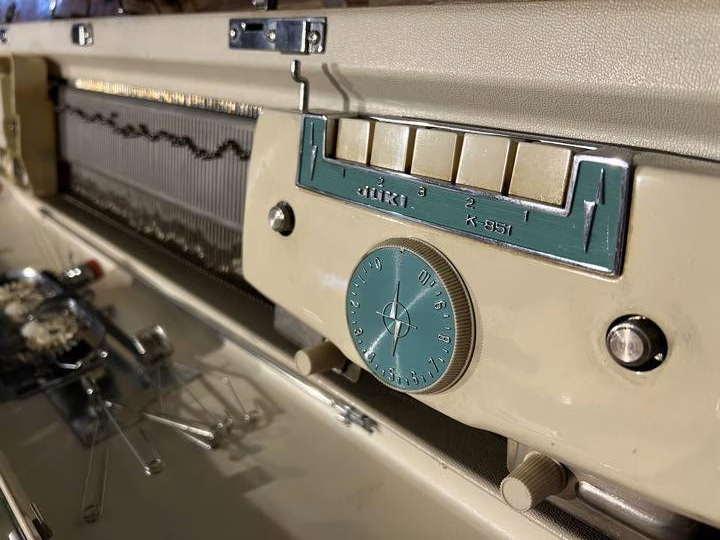
JUKI K 851 knitting machine
JUKI K-851 is a standard-gauge, manual/basic knitting machine with 200 needles, 4.5 mm apart. This machine was manufactured in Japan very likely in the early 1960s judging by its vintage row counter, and 3-wire tension mast (capable of accommodating three different yarns). Such design of the tension mast included with the machines manufactured up to…
-
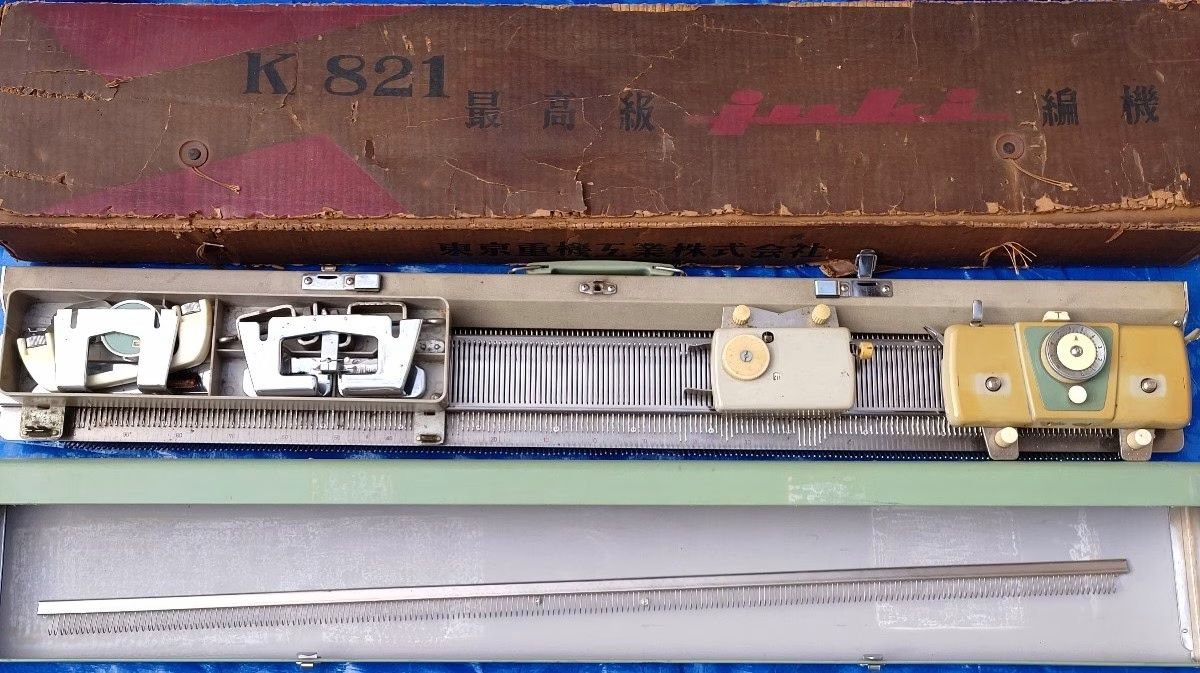
JUKI K 821 knitting machine
JUKI K-821 knitting machine is a truly vintage knitting machine. I could not find a manual for this machine. But judging by its similarity with the Silver Reed SK8 and Silver SK101, machines, it was very likely released onto the market in the late-1950s/early-1960s (see my collaborations on why below). I could not find a…