
Brother KH521 knitting machine is a 4-push button machine with 200 needles, spaced 4.5 apart.
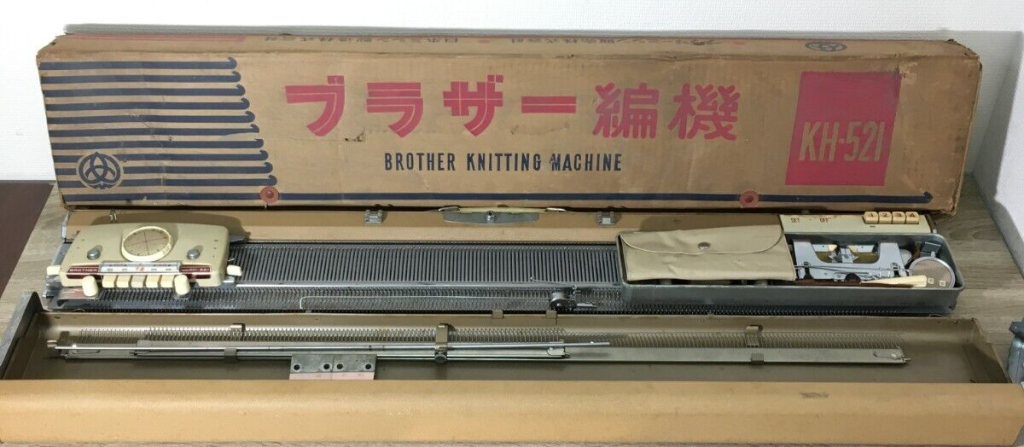
It was manufactured in the early 1960s (the year on my machine says 1961). It is possible that it was released for the Japanese market only, judging by the number of writings on the packaging, on the machine, and on the carriage in Japanese.

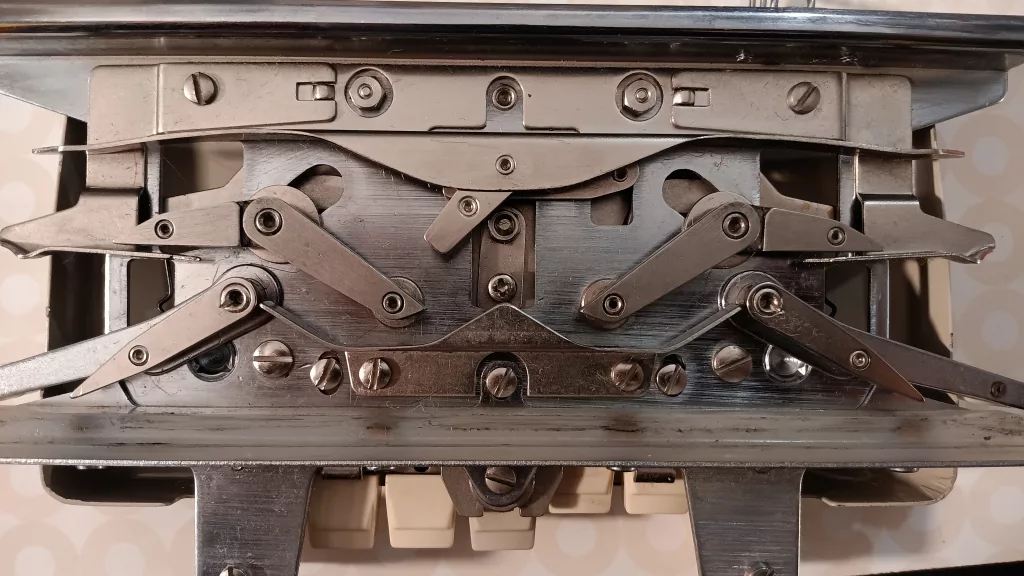
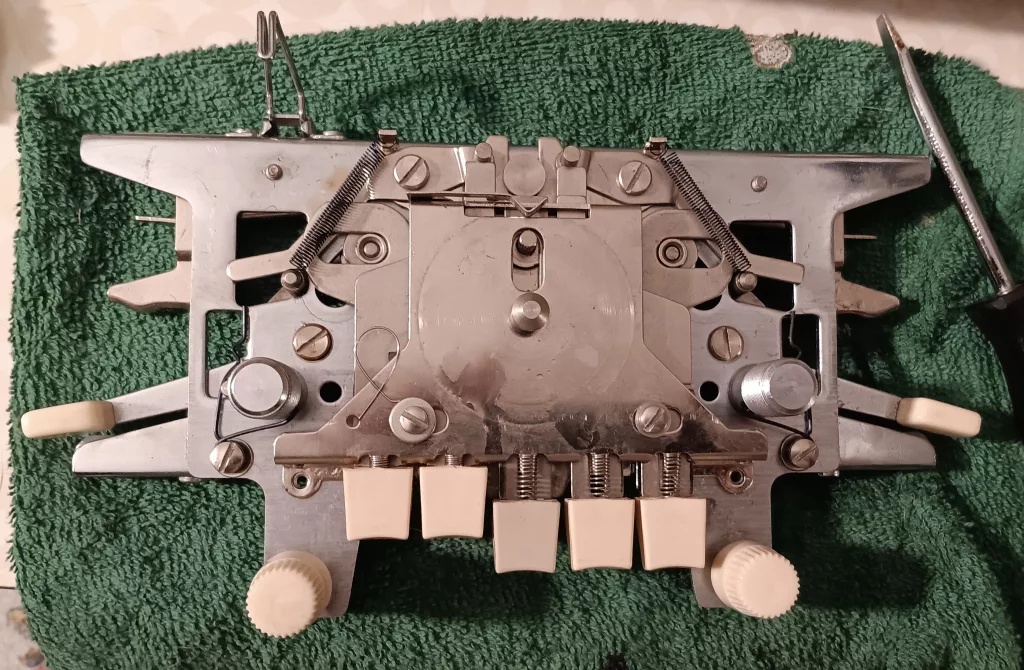
Brother KH521 still possesses vintage metal end caps that open outwards (like Brother KH531 and KH511). Yes, it is the first model with “less” vintage carriage (Brother KH511 still has a retro carriage design). I was lucky enough to have a carriage from the KH511 model and the Brother KH521 machine at the same time. So, I can say with confidence that carriages and sinker plates are interchangeable between the KH521 and KH511 models. In fact, both sinker plates have the same features (removal of the inner plate – not sure yet what the correct term for it is) to be compatible with the Brother KR321 ribber.
I recently had the privilege to work on this machine. It is very similar to other 4-push button machines, like Brother KH531 and KH551, in terms of how to operate it. Thus, if you can’t find information on Brother KH521, look for manuals for these machines.
A couple of important things I noticed: It is very important to pass the yarn through both springs in the sinker plate.
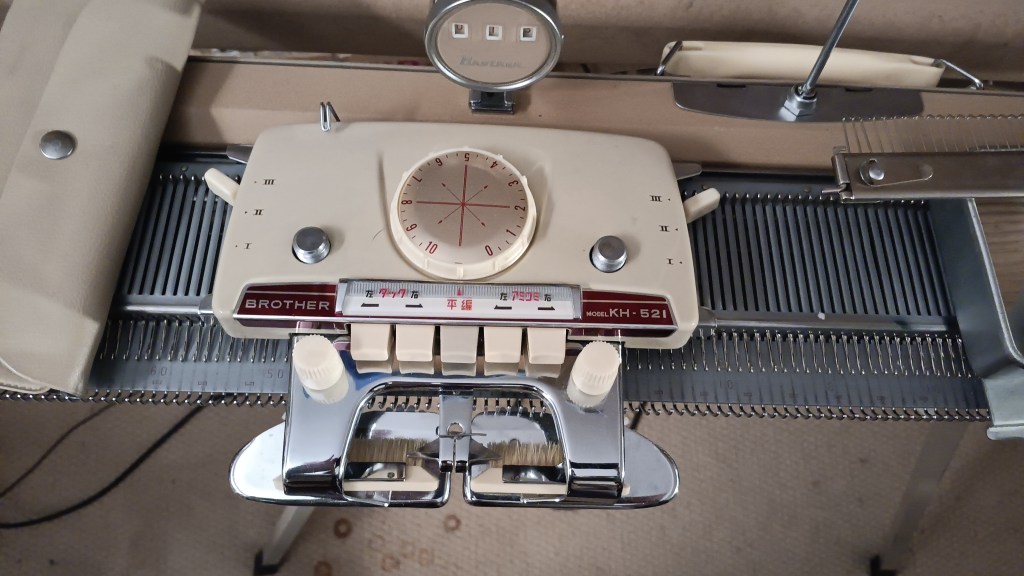
If you got the machine with the writing on the carriage in Japanese, refer to the manuals for KH531 and/or KH551 for details. As a quick reference: the two left-hand side buttons are “tuck”, the middle button is “plain” knitting or to reset the buttons, and the right-hand side buttons are “part” or “slip”.
I liked how easy it was to remove (and then put together again) the end caps to deep-clean the machine, to access needle springs to adjust them and just to see whats going on inside the machine. The end caps are metal and are screwed into the sides. I suspect that the manufacturer started making machines (mostly after early 1970s) with less metal to make them lighter and maybe more affordable.

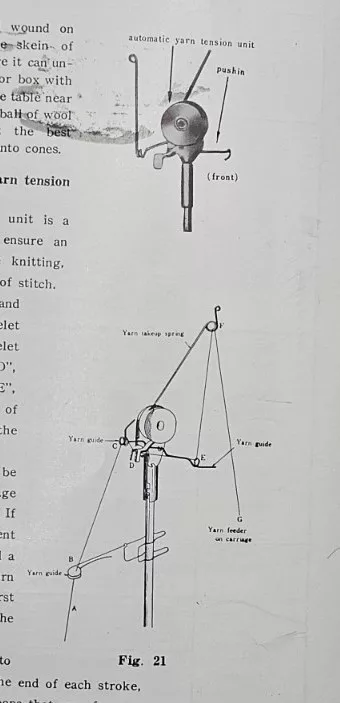
The tension mast is similar to the mast from the brother KH311 and KH511 setups. I recommend practicing the yarn threading quite a bit, especially if you worked with other machines in the past. The manual does not really explain well how to thread the yarn. I also recommend practicing threading differently, as it creates various yarn tensions, which is handy because there is no tension dial for the yarn on the tension mast (unlike later models).
The head of the tension mast moves slightly left and right, probably to follow the carriage. It was surprising at first but the more I knotted, the more it made sense. I wished the tension of the yarn through the mast was adjustable.
Additionally, the tension mast can accommodate only one thread at a time. This was surprising because tension mast from earlier models.
Despite similarities with the Brother KH311 machine, the Brother KH521 has a more advanced carriage with three settings of the Russell levers.
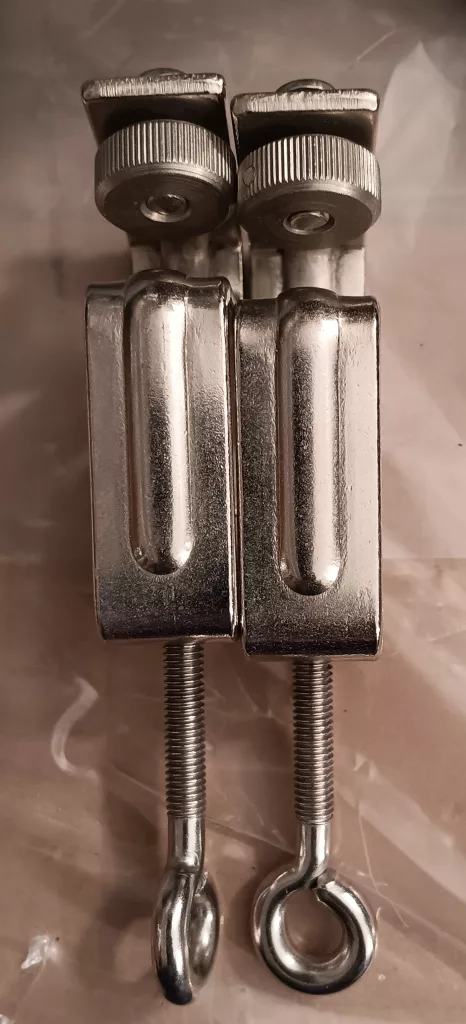
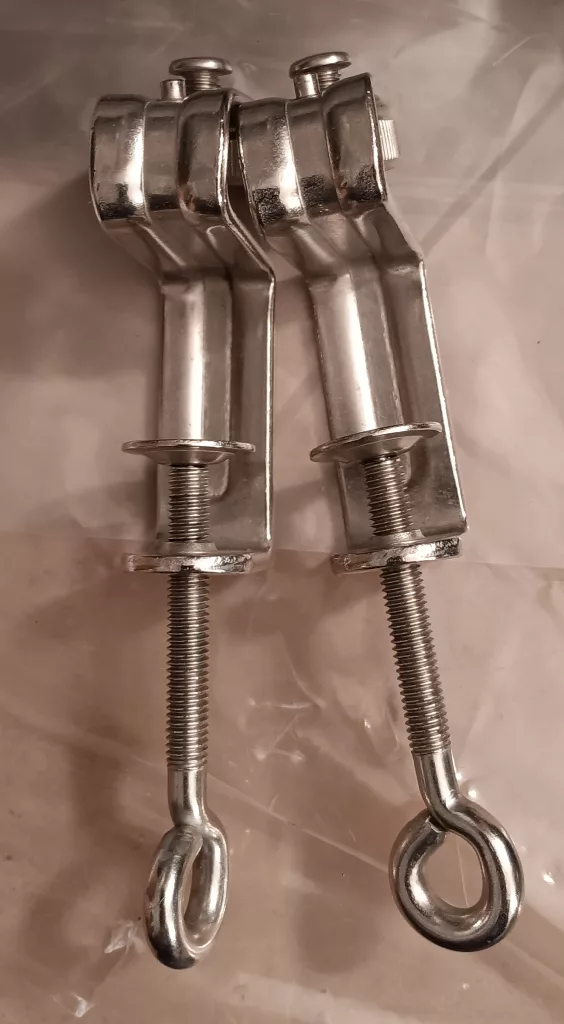
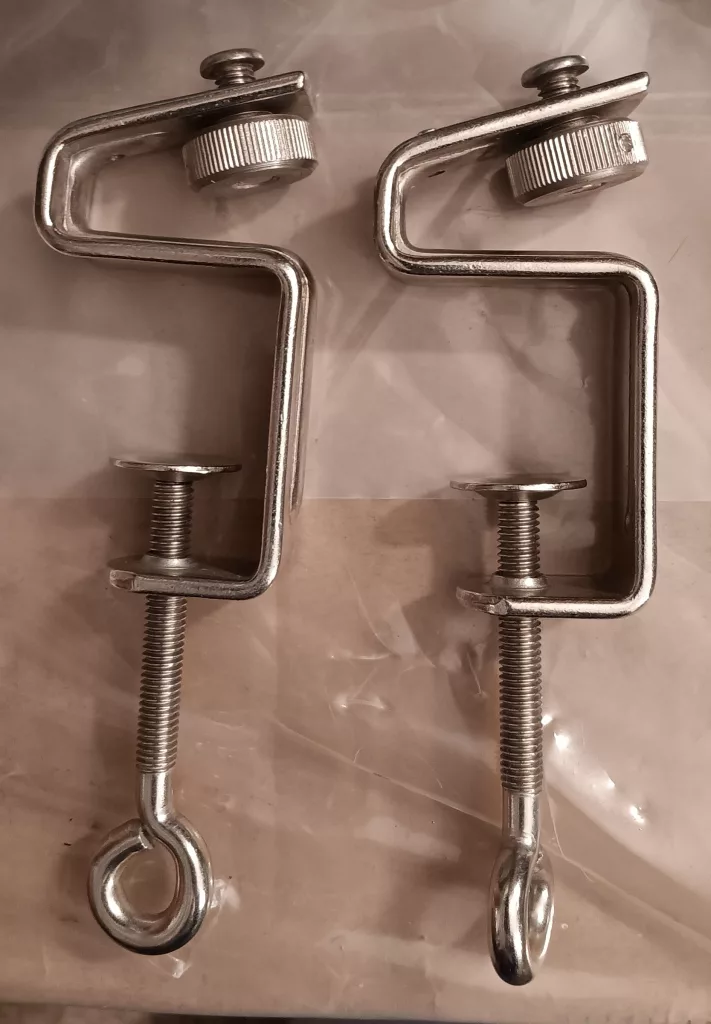
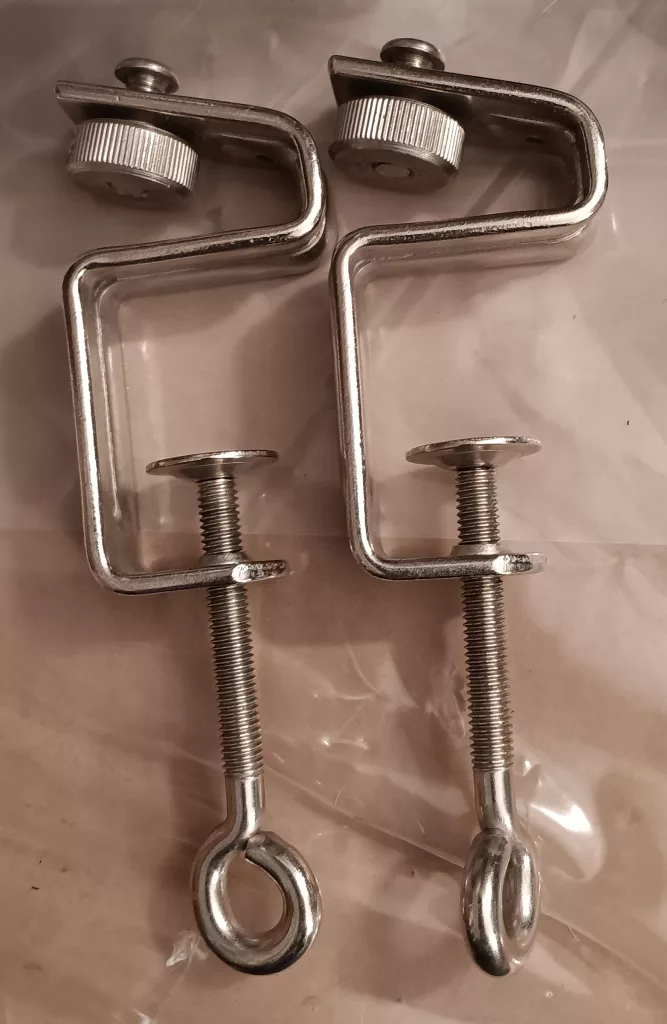
Brother KH521 comes with S-shaped table clamps, typical for early machines. Although any S-shaped clamps will work with just the machine, the original ones look like those shown below (slightly different from the table clamps for KH551).
The row counter is a clip-on round one of vintage design. This particular model does not allow number rotation in either direction, only in forward. Thus, to rezero the numbers, simply keep increasing the number until it hits zero again. Do that for all three dials.
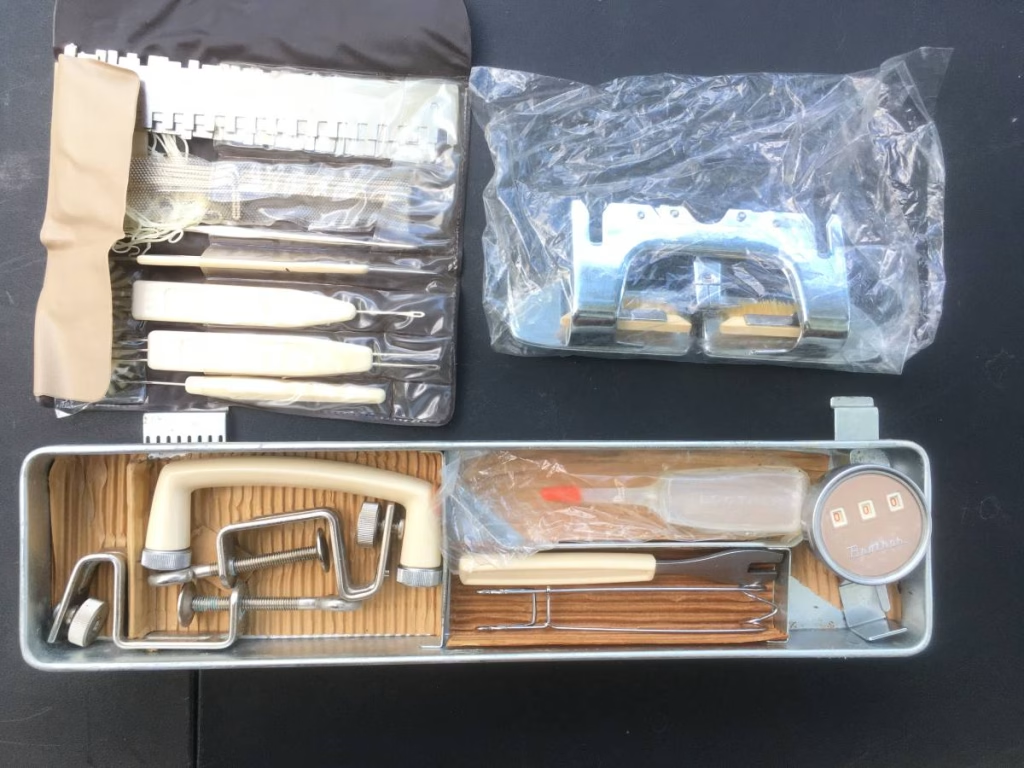
Judging by the experience with other pushbutton machines, here are a couple of hints to avoid mistakes with the set-lever and pushbuttons:
- Adjusting the tension (increase it slowly – decrease the number) as transitioning from stockinet to tuck/slip.
- general rule of thumb: tuck requires higher tension (smaller number on the tension dial) than stockinet. So does slip/part.
- Make sure the ratchet tool goes ALL THE WAY to the left when activating the needle selection and all the way to the right (to OFF position); otherwise, incorrect (or incomplete) selection might happen.
Also, based on my experience with other pushbutton machines, the knitters need to take their time familiarizing themselves with their new machine using swatches: play with the tension dial, how fast you move the carriage back and forth, how many and how much weight are applied, how far the carriage goes past the knitting. I know these are sound advice for ALL knitting machines, but i feel with the pushbutton machines, this is especially important.
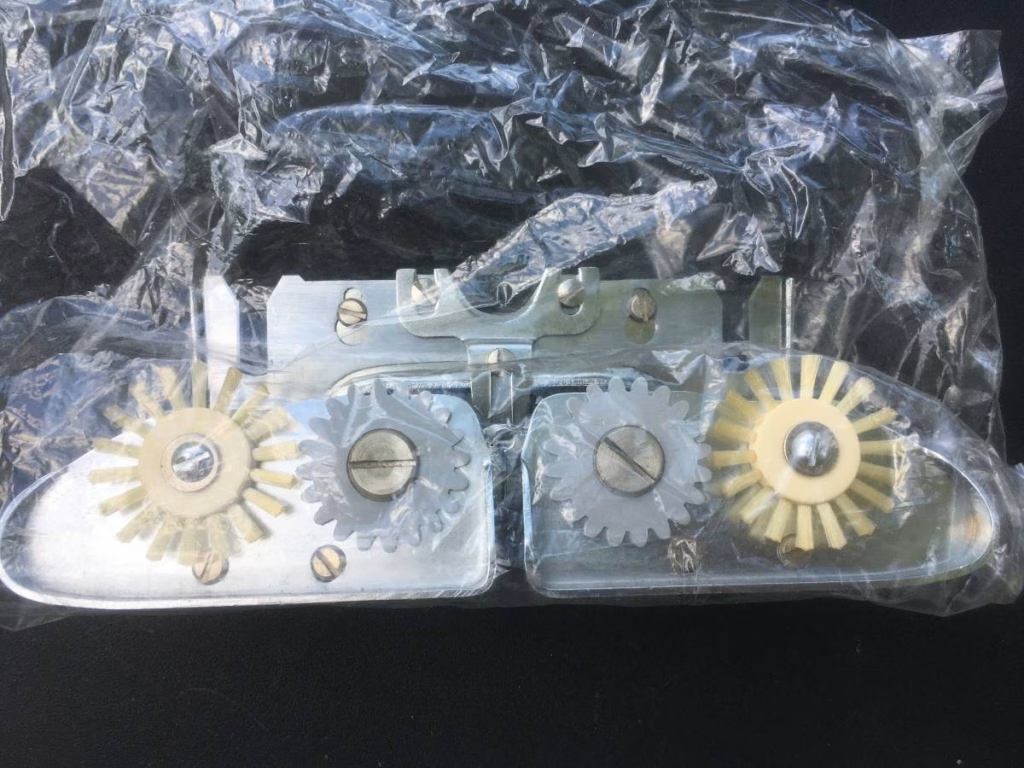
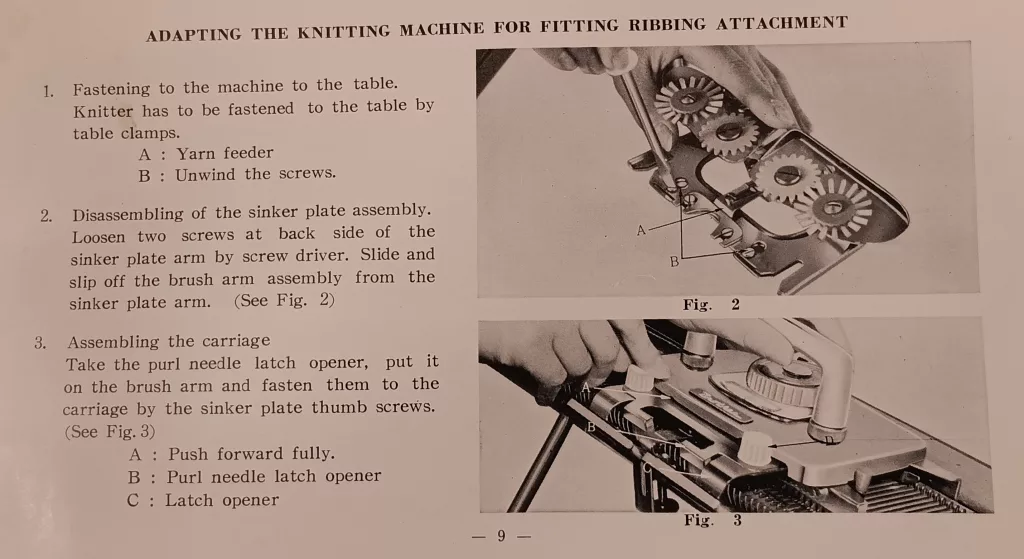
The Brother KH521 knitting machine can be matched with the Brother KR321 ribber. In fact, the KH521/KR321 setup is interesting. That inner section I was talking above about is removed and an attachment for the ribber is placed instead. Below is a picture from the manual of KR321.
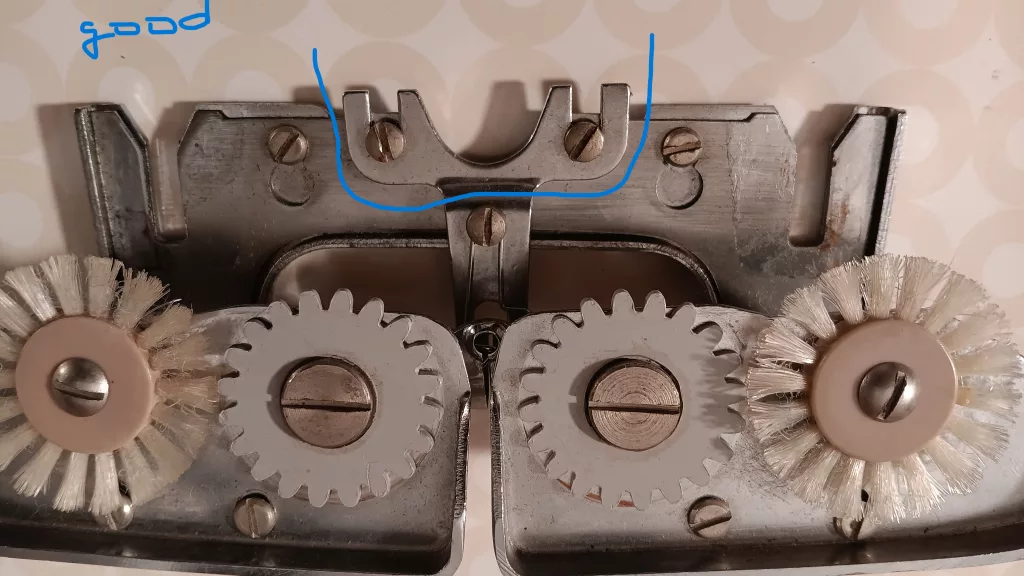
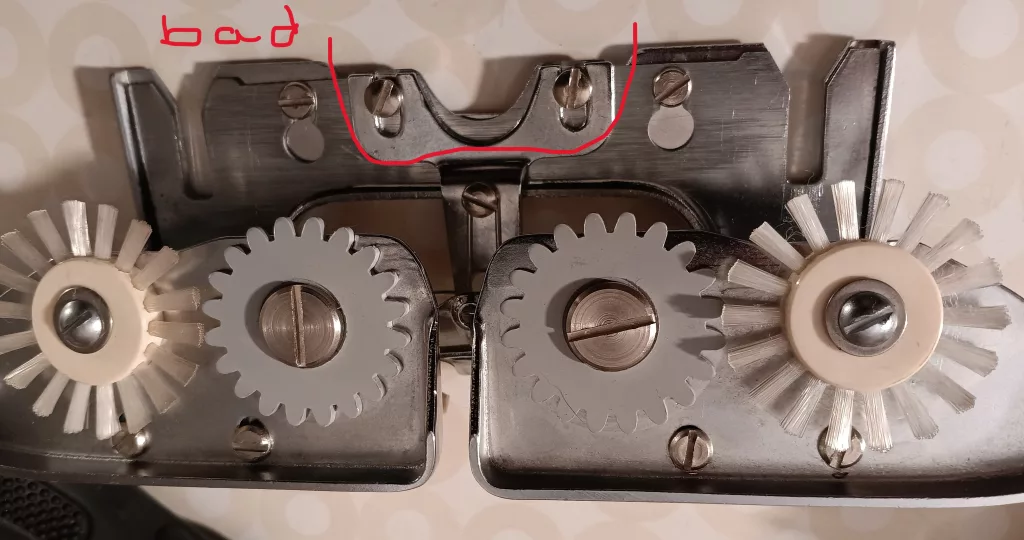
Despite this, it is important to pay attention to the right configuration to that inner section when switching the sinker plate back to its usage on the main bed only.
Despite its similarity with KH551, Brother KH521 IS NOT compatible with the Brother KR551 ribber. However, carriage from KH551 in combination with sinker plate from KH551 will work on the KH521 bed. But the sinker plates are not interchangeable.
Although not included with the standard setup, Brother KH521 can benefit from a needle picker, a small but handy tool for a machine with only basic/manual capabilities and some automatic ones (like 4-pushbutton machines, KH531 and KH551). Watch a video on how it works.
Pros and cons of the Brother KH521 knitting machine.
PROS:
- very mechanically robust
- offers automatic needle selection with the pushbuttons and ratchet tool
- light-weight
- Parts (needles and selection tools) are still available
- Manuals of similar machines are available online for free
- carriage and the needlebed are very easy to disassemble for cleaning and maintenance
CONS:
- The yarn tension cannot be adjusted as easily on the tension mast
- The tension mast can accommodate only one thread. So, if you are knitting two-colored patterns, the yarn will need to be removed and threaded in all the time.
- pay close attention to how the inner section of the sinker plate is connected