Last Updated on September 5, 2026 by KM-nerd
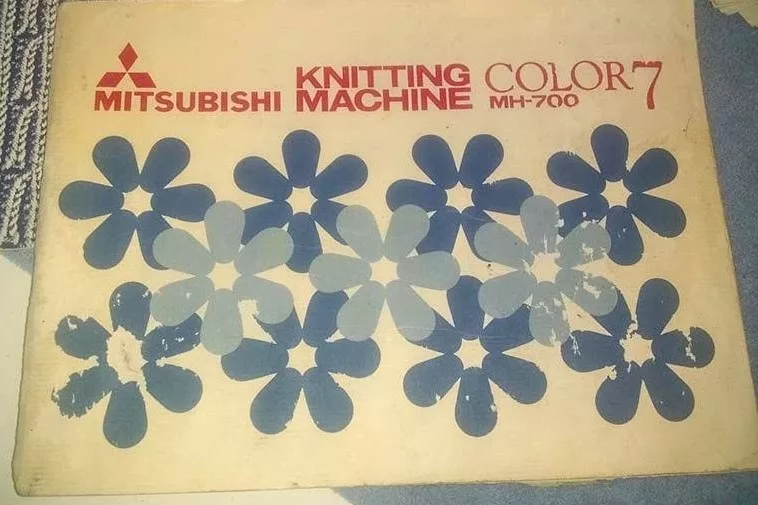
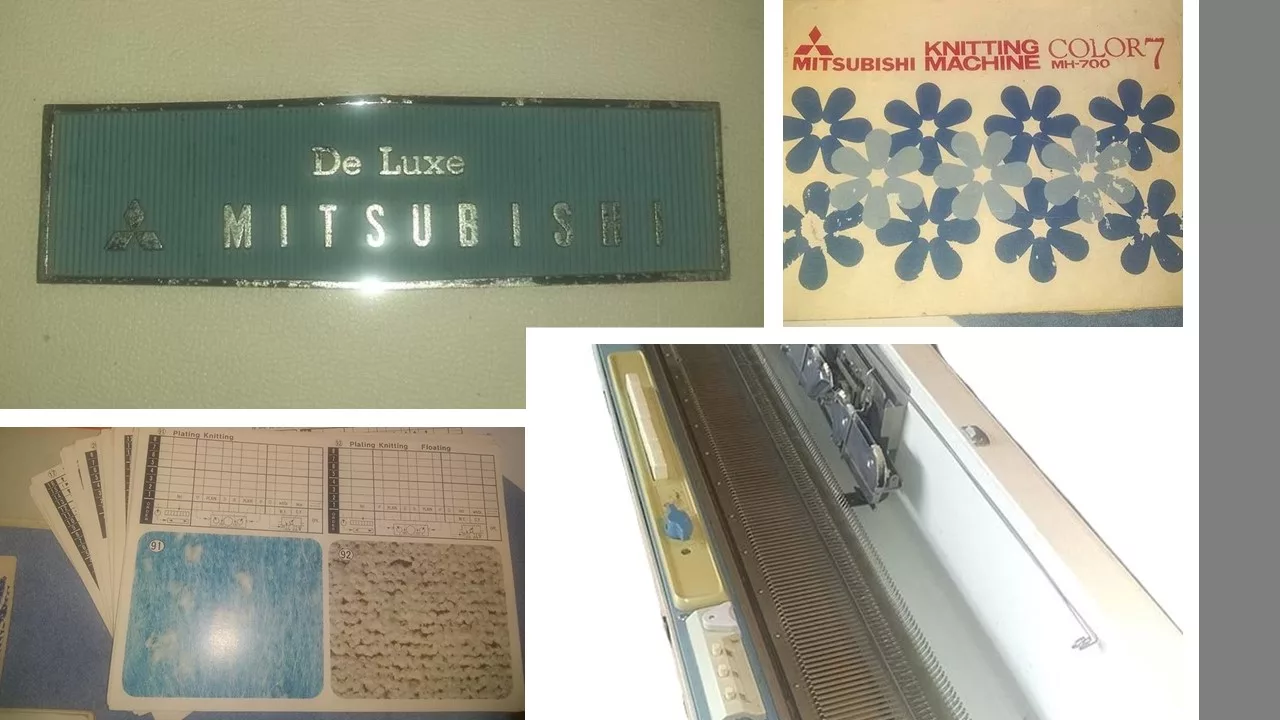
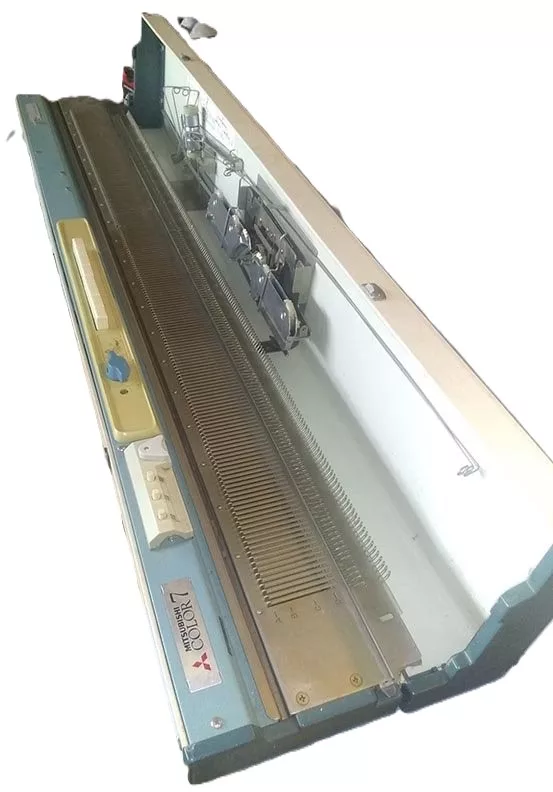
Mitsubishi MH700 Color 7 knitting machine is a standard-gauge knitting machine with 200 needles, 4.5 mm apart, and pushbutton capabilities.
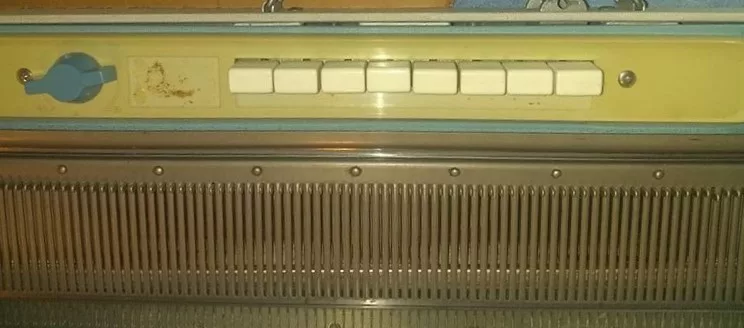
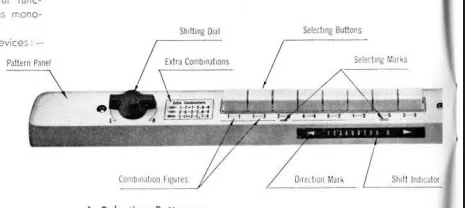
The pushbutton-based mechanism is NOT like in Brother knitting machines, where, by pressing one button, you’ll get a specific needle brought forward (after the latch is activated). In this machine, the buttons are responsible for the combinations of specific needles.
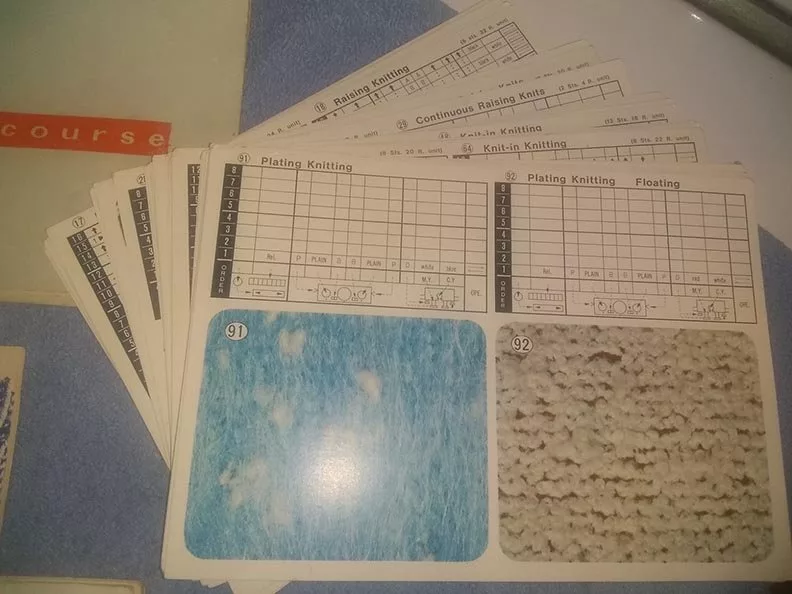
Overall, the manual states that there are twenty dix different combinations of needle selection.
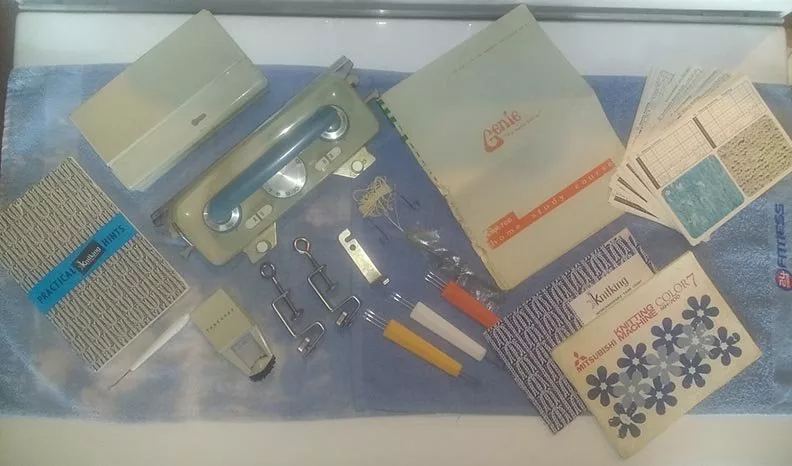
To help knitters to knit with these specific combinations, there are pattern cards.
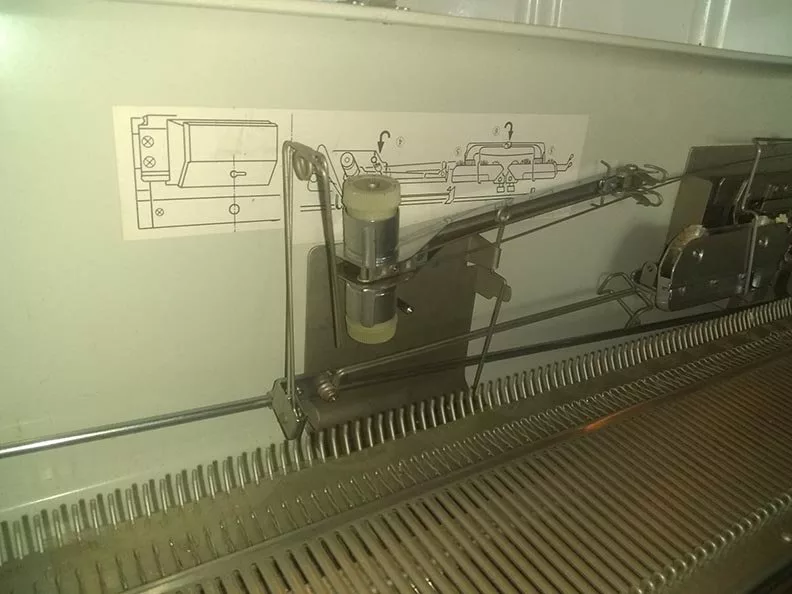
Also, unlike Brother pushbutton machines, there is no ratchet tool that activates the needle selection. For the Mitsubishi MH700 Color 7 model, the needles are selected after the buttons are pushed and the carriage is moved across the active needles. The blue knob on the left in the picture below is used to shift the selected needles’ position. Refer to the manual (available online for free).
So, this selection method is somewhat a combination of the Brother pushbutton machines and Silver/Silver Reed/Empisal/Studio/Singer turn knob machines. Thus, if you are looking for tips and instructions on how to operate the Mitsubishi Color 7 MH700, you can search for those machines.
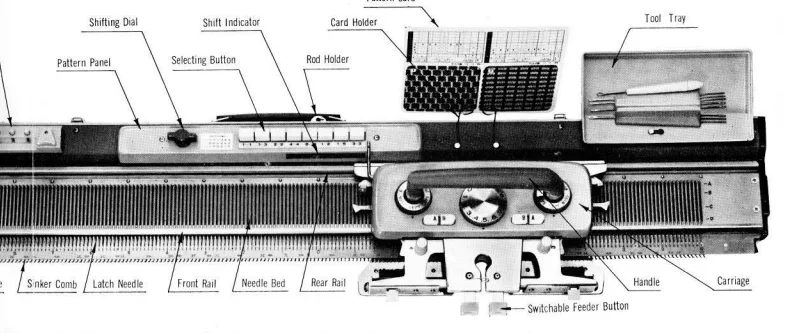
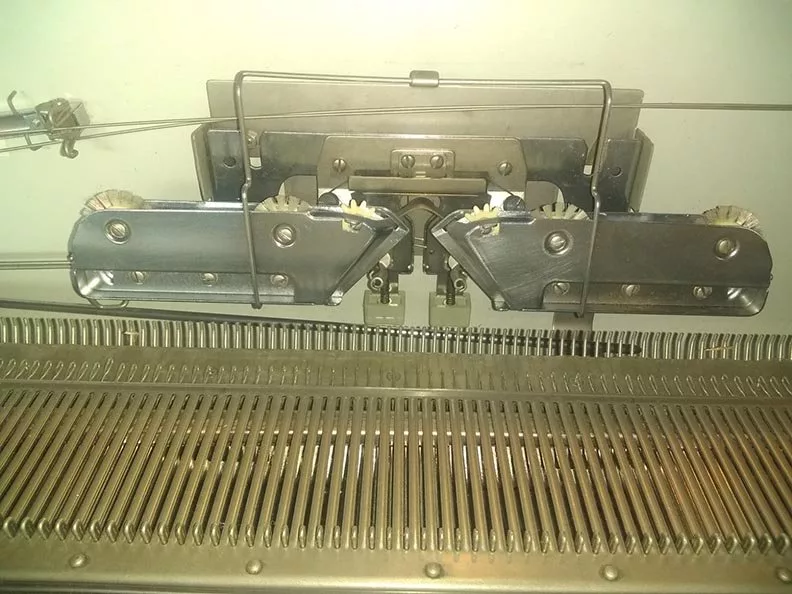
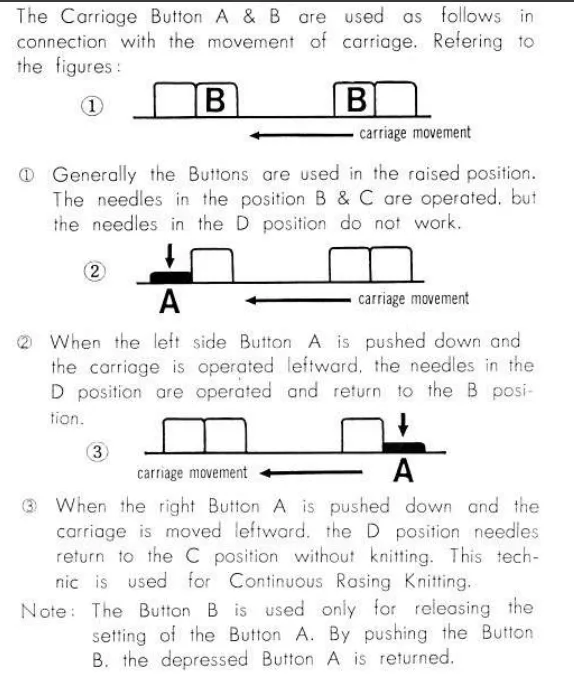
The carriage has buttons BA and AB, which act like Russel levers and activate or ignore the needles in certain positions.
Here is one of the examples from the manual:
In addition, the carriage has two “knit dials”, located around the posts to which the carriage handle attaches. The positions of the knit dials are KNIT-IN, PLAIN, RAISE, SELECT, TUCK and SLIDE. It is convenient to have two different knit dials when the stitches knitted in the left direction are different from the stitches in the right direction.
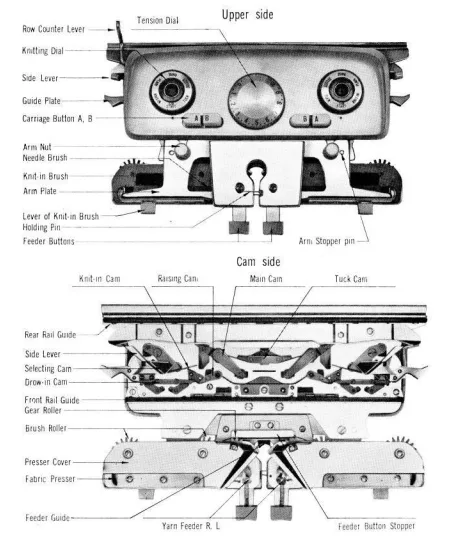
My impression is that RAISE is equivalent to “hold” on other machines, SLIDE is equivalent to “slip” or “part”; KNIT-IN is two-color “fair isle”…
As you can see, there is a lot going on with this machine. Refer to the manual for further details. I would appreciate it if you could email me feedback on this machine: it is so unusual and has so many intricacies.