I am about to become an owner of Brother KH511, so stay tuned for more first-hand insights!
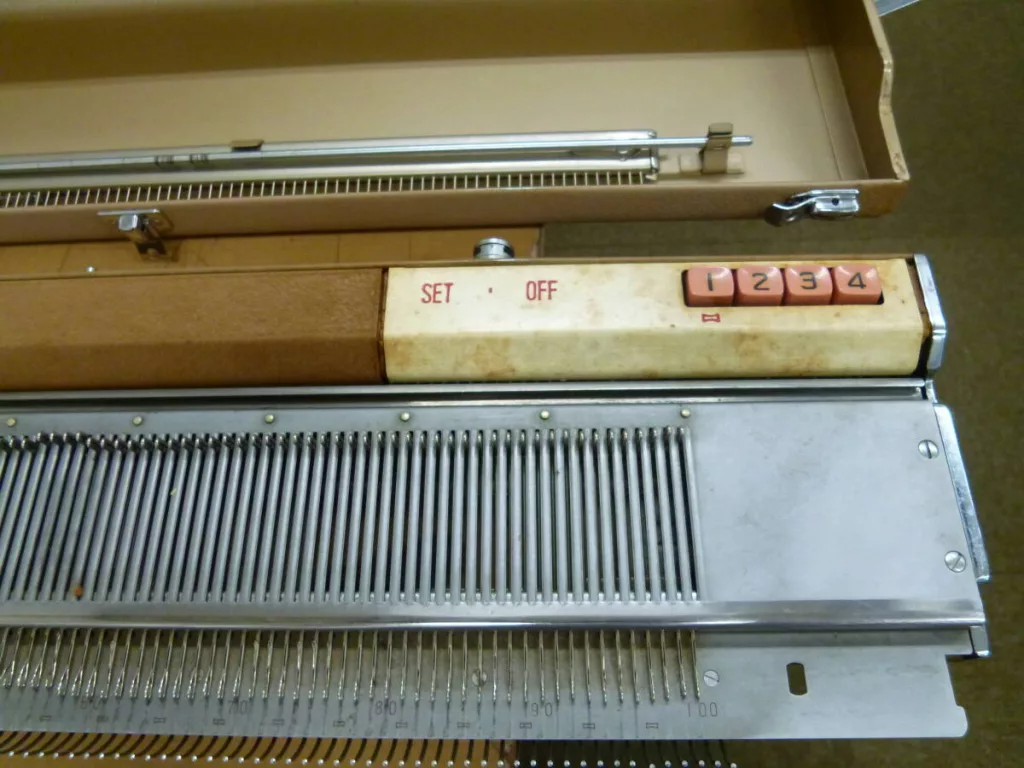
Brother KH511 is very likely the first push-button knitting machine to appear on the market. Its only 4-pushbuttons allow for a more automatic needle selection, activated by pressing the buttons and rotating the ratchet tool.
The machine has 200 needles and is of standard gauge (which means needles are 4.5 mm apart).
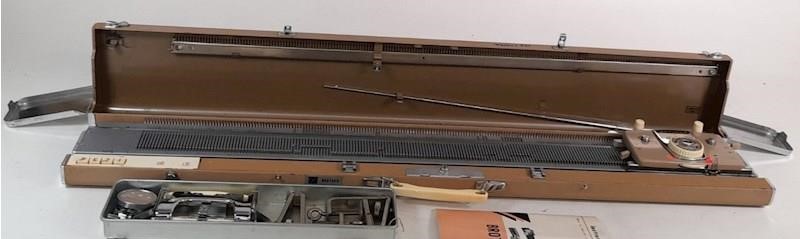
Its vintage look is similar to the earlier manual-only models: with metal unfolding flaps like KH311. The carriage also looks vintage, but, to the best of my knowledge, not very similar to any of the Brothers’ earlier knitting machine models I found so far.
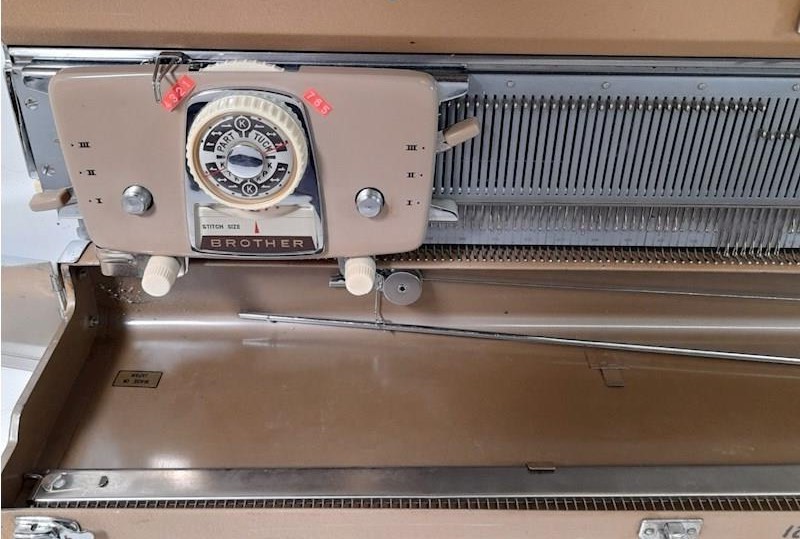
Talking about the carriage: I saw a machine with similar pink pushbuttons but with a carriage looking slightly different (see below). Maybe this carriage below is for models released for Japanese markets only.
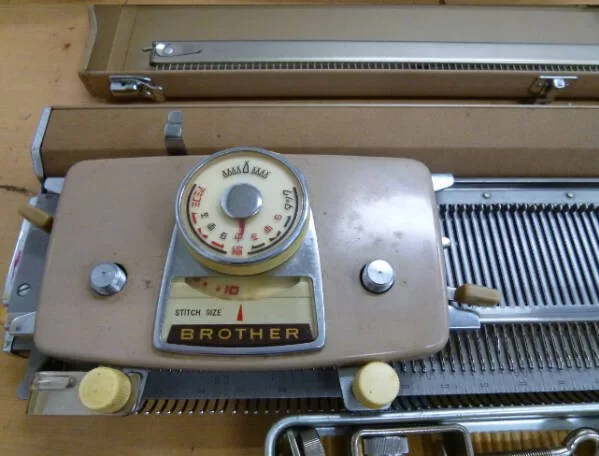
The uniqueness of this machine is its pink pushbuttons (although one of the pictures below shows a machine without pink buttons… A different model or another variation of KH511? hmm….). The rest is identical to the later models: KH521, KH531, and KH551; thus, read the corresponding posts.
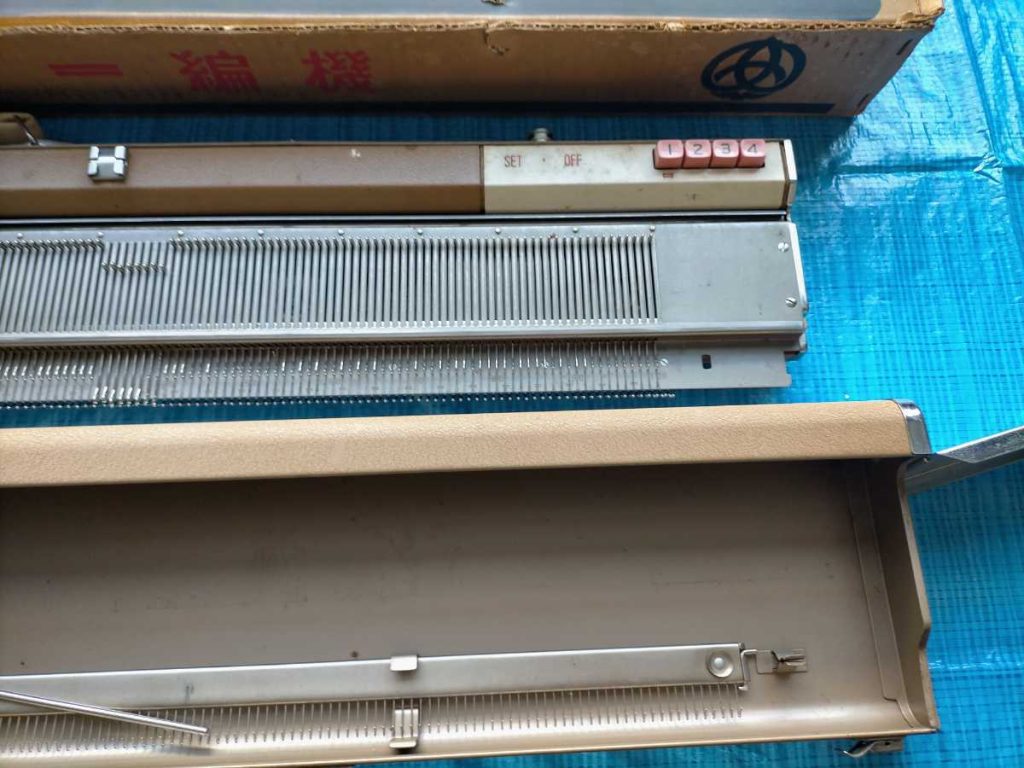
I was lucky enough to have a carriage from KH511 at the same time I serviced its younger sister, Brother KH521. I can confidently say that the KH511 carriage and sinker plate are interchangeable with those from KH521 model. In fact, sinker plates have the same feature where the inner plate (not sure yet what the exact term is) is removable to accommodate the arm from the KR321 ribber. Thus, I believe Brother KH511 will work with Brother KR321 ribber.
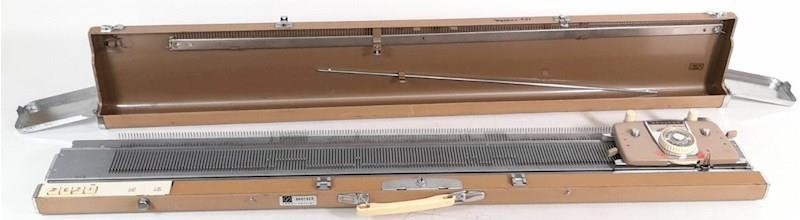
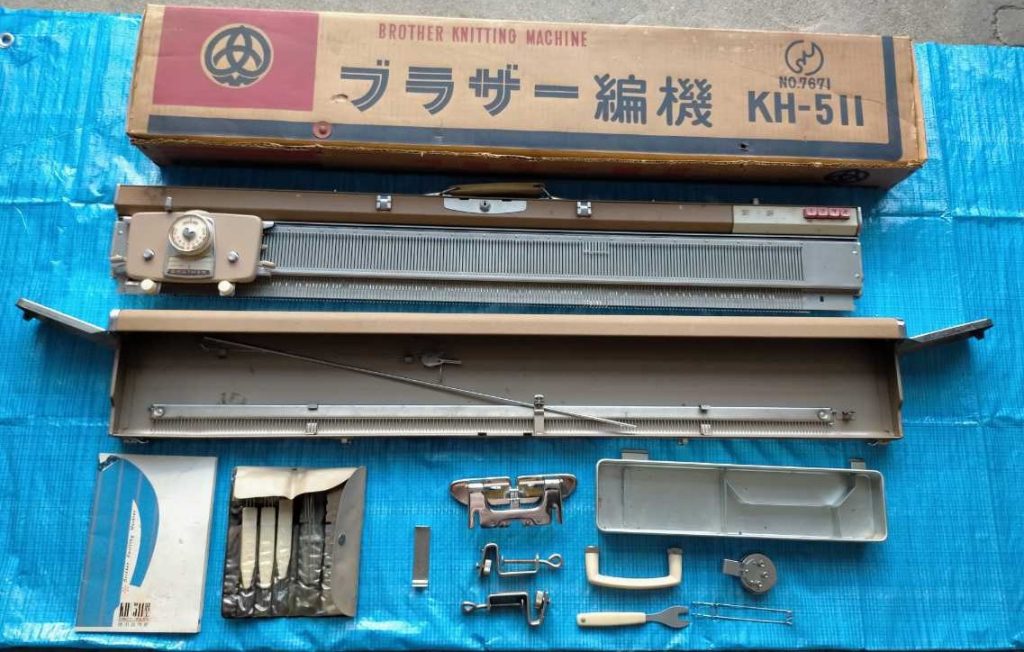
Well, talking about the KR321 ribber: it has a picture of the KH511 machine with its accessories. So, here it is:
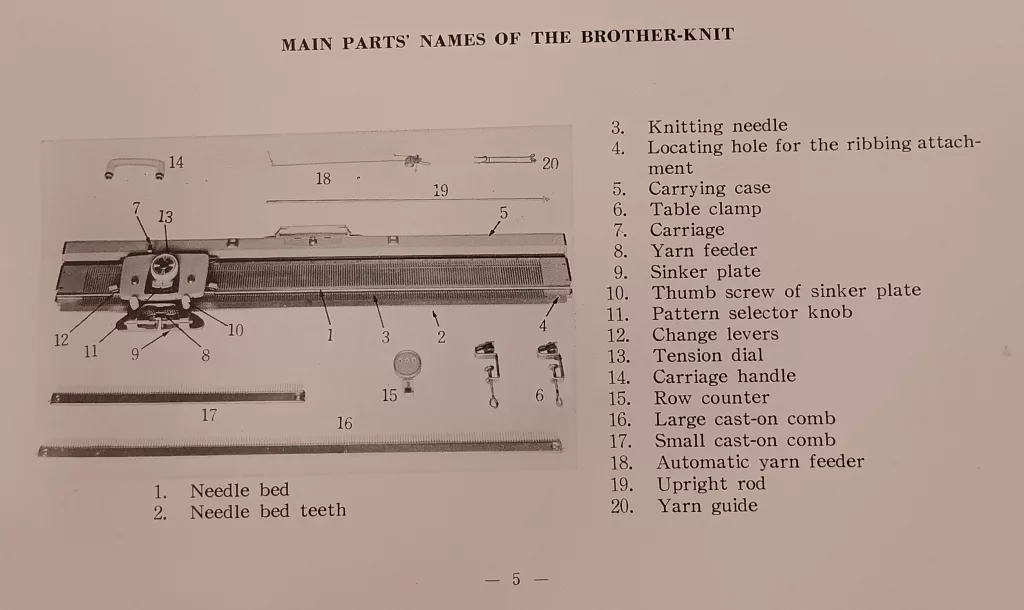
Younger sisters of Brother KH511 (such as Brother Profile 550, Brother Profile 551, etc.) include a needle picker, a small but handy tool for a machine with only basic/manual and some patterning capabilities (watch a video how it works). Although this needle picker is not included with the setup of KH511, I feel it can benefit from it.
Judging by the experience with other pushbutton machines, here are a couple of hints to avoid mistakes with the set-lever and pushbuttons:
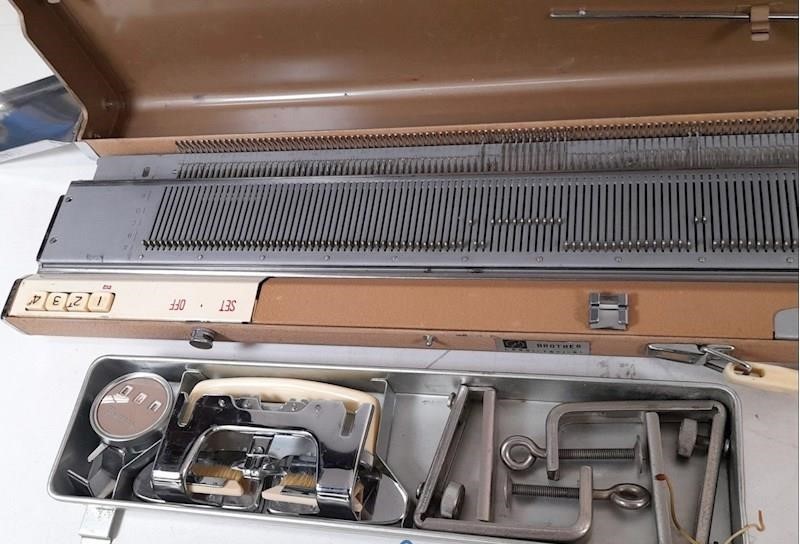
- Adjusting the tension (increase it slowly – decrease the number) as transitioning from stockinet to tuck/slip.
- general rule of thumb: tuck requires higher tension (smaller number on the tension dial) than stockinet. So does slip/part.
- Make sure the ratchet tool goes ALL THE WAY to the left when activating the needle selection and all the way to the right (to the OFF position); otherwise, incorrect (or incomplete) selection might happen.
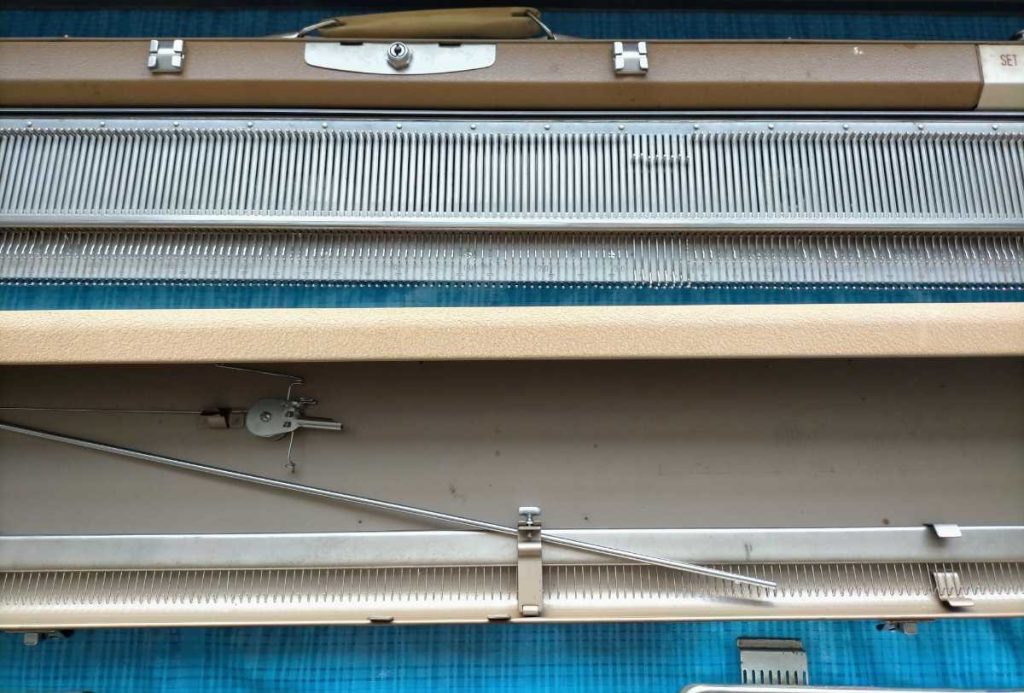
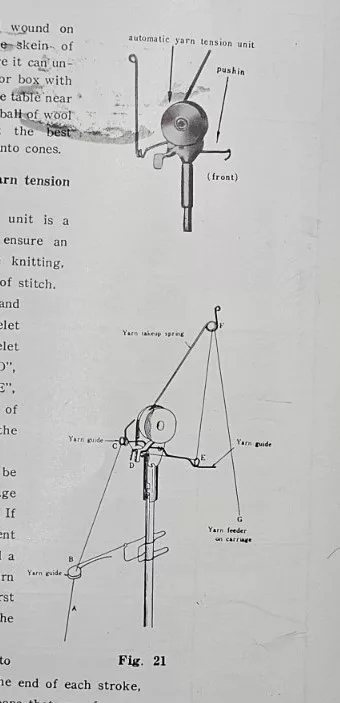
Notice in the picture above a quite unique tension mast. If you have used other knitting machines before, dealing with this tension mast might be a little bit frustrating. So, here is a schematic of how to thread the yarn through it.